
Overview
It is hard not to associate Brazil with football, because one topic alone can bring out two modern soccer stadiums in a row. This week let us resume our journey in Brazil and delve into the world of stainless steel through another case of football stadium - Castelão Arena.
Castelão Arena
As we introduced Allianz Parque as the first stadium to use stainless steel façade in Brazil last week, we had made a mention of Castelão Arena that followed suit. Both are modern soccer stadiums in Brazil with their own advantages. Since Castelão Arena is a government project, it sets itself apart from its peer in terms of both scale and reputation.
Castelão Arena boasts the first stadium being awarded with a LEED Certification in South America. To embrace the FIFA World Cup Brazil 2014™, the arena has been redesigned into a modern, multi-functional and self-sustaining arena. For the previous four World Cups, Castelão Arena stands out as the most economical arena. It covers an area of 183,730 m² (Lumali 2025), capable of accommodating 63903 spectators and 4200 parking spaces (Ge Globo 2023).
The Background Information of Castelão Arena
Castelão Arena (or Estádio Governador Plácido Castelo in full name), originally built in 1973, was located in Fortaleza, Ceará, Brazil, and became the fourth largest arena national wide then. After its initial construction, it went through a complete renovation scheduled into three stages during May 2001 and March 2002, mainly for fixing and recovery of the existing facilities. The double-tiered stands enlarged the capacity from 57,867 to 60326 spectators.
5 Years later when Brazil was selected to host its second World Cup, Castelão Arena came to embrace a new round of redevelopment. The Arena was closed on 31 March 2011 for reconstruction and completed on 15 December 2012, with a total cost of approximate R$ 518.6 million. It turned out to be the first of the 12 stadiums being built or redevelopment for the tournament and above all the only one to present cost reduction with R$ 104 million claimed to be saved. It generated more than 2000 direct jobs and had roughly 1400 employees, an immediate boost to local economy.
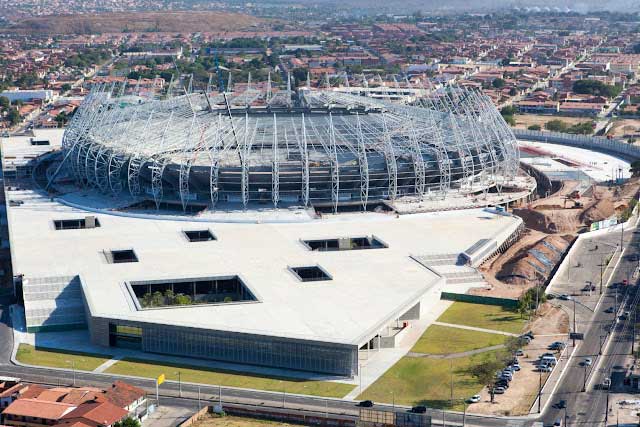
If the 2002 redevelopment was meant to be a complete reform, this one was designed to reuse the existing structure and preserve the original identity for an optimization and expansion while meeting the FIFA requirements. The new renovation involved the renovation of elevation, the addition of a larger roof, the construction of an underground parking lot, apart from certain energy efficient measures for sustainability.
60 extra steel columns were assembled around the existing concrete structure to reduce the vibrations from the stands and to support the new roof structure. The old roof was removed with a large new one allowing for 100% coverage of all spectators. The field was lowered even further by advancing 30 meters, leaving the distance between the public and the players at only 10 meters. Larger capacity and greater excitement!
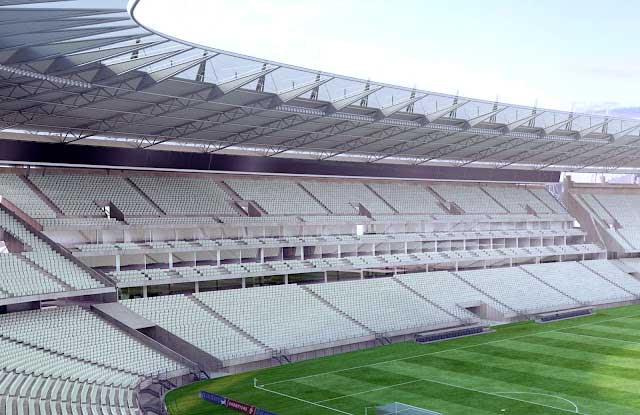
The Design of Castelão Arena
The reconstruction of Castelão Arena was led by Uruguayan architect Héctor Vigliecca, the founding partner of the architecture firm Vigliecca & Associados, with offices based in São Paulo, Rio de Janeiro and Salvador. "From the beginning, we had the idea of reusing the existing structure. With this we were able to firstly reduce the costs of the project; secondly, preserve the image of the stadium consolidated in the collective imagination; and thirdly, maintain and respect the public heritage, built with a lot of effort, in several stages," said the architect (Galeria Da Arquitetura 1999-2006).
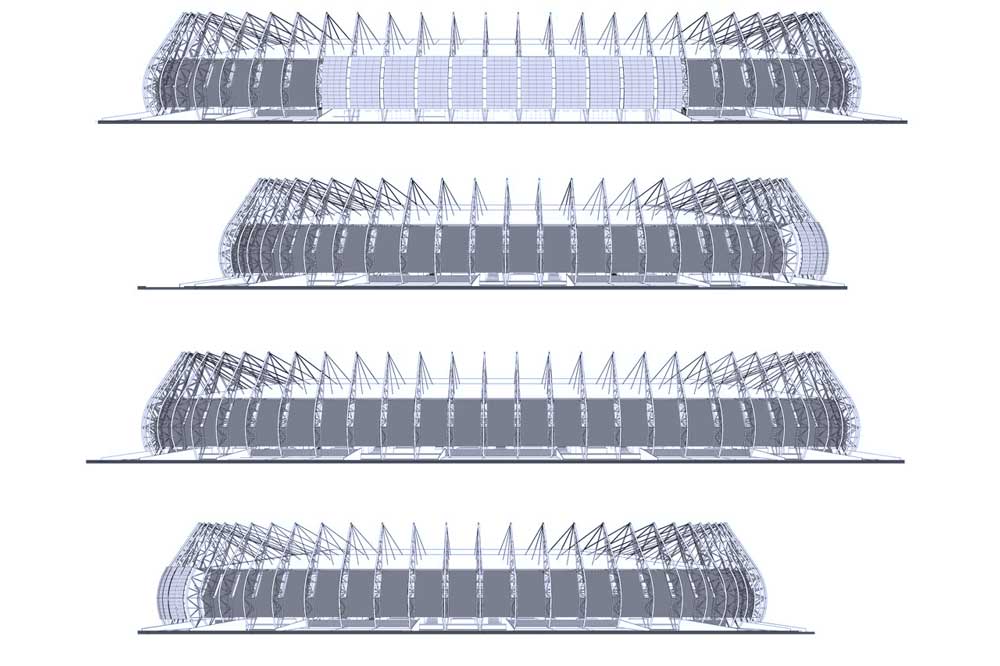
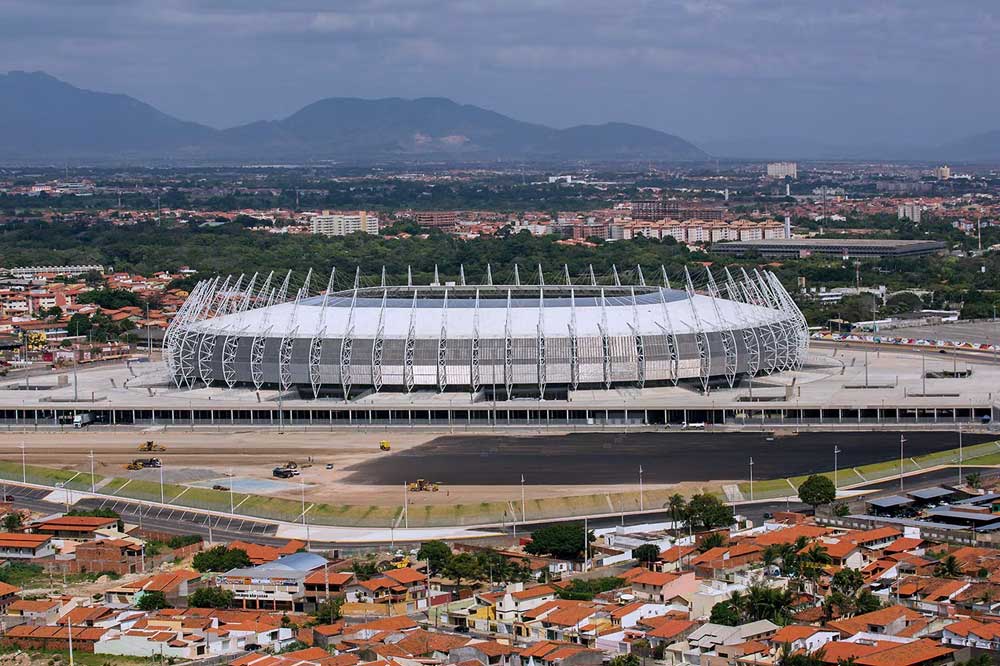
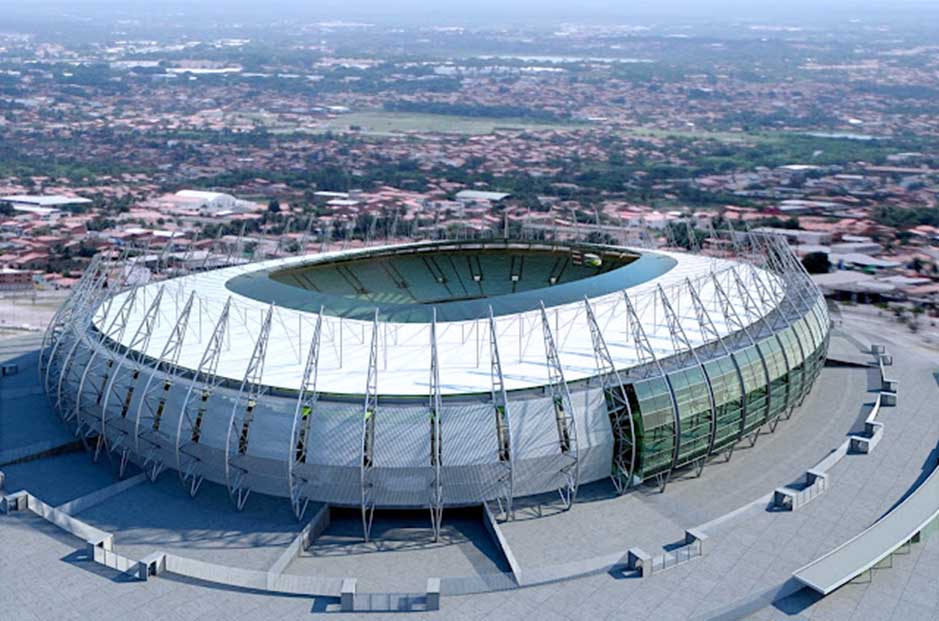
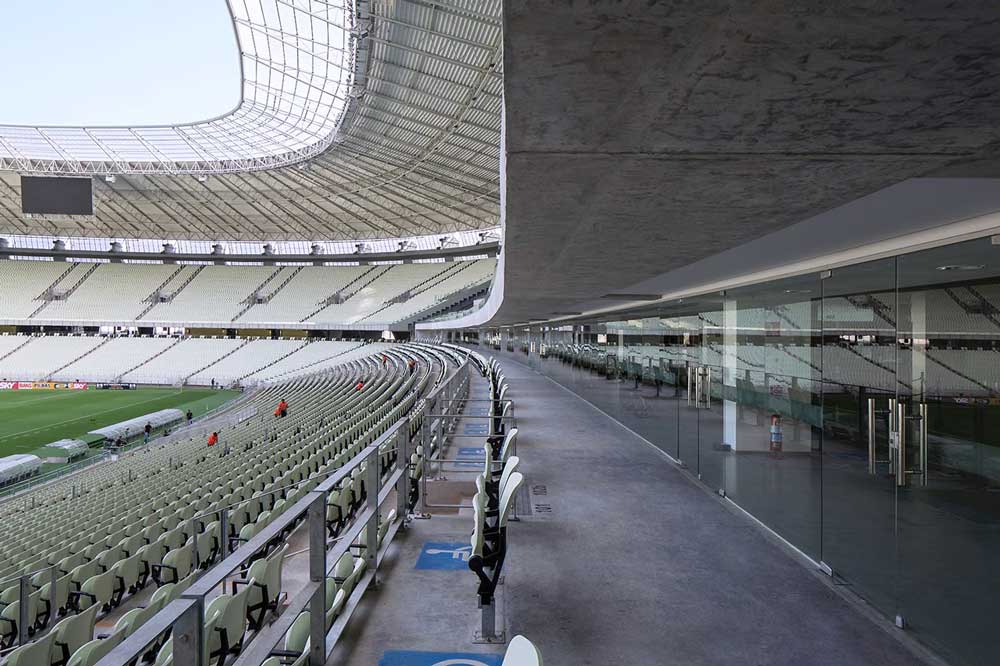
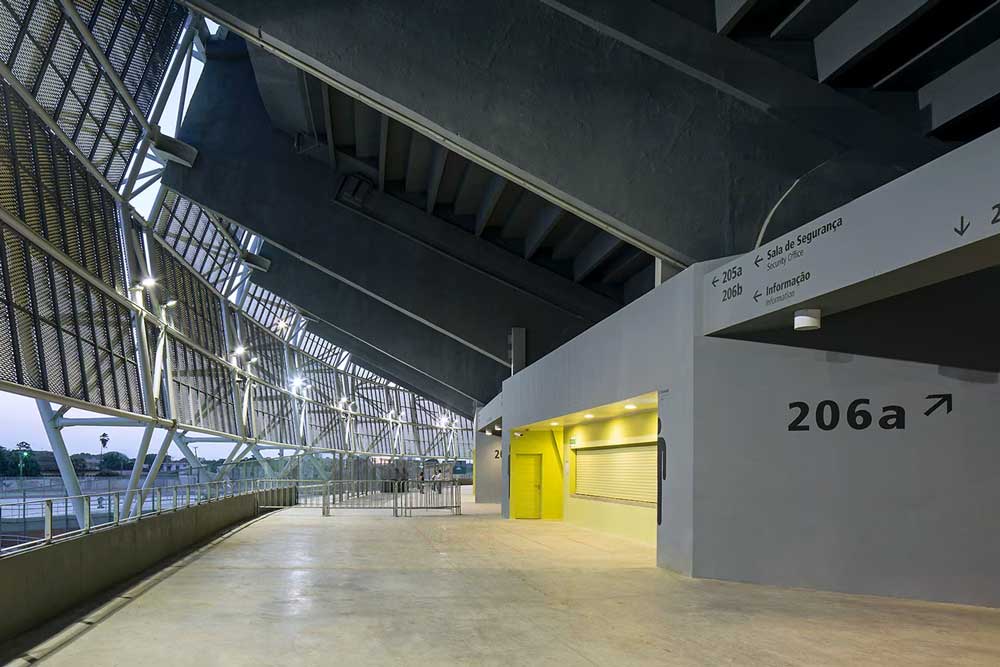
The 60 reticular metal porticos and the translucent glass-and-stainless steel façade create new image of modernity for the renovated Castelão Arena. The concepts of “a modern, multi-functional and sustainable arena” and “the place for urban events” have been materialized with the modern design in both the exterior (as below photo) and interior (as the next photo below) of the arena.
In addition to the contemporary facade, the design was mindful of environment impact. The use of existing structure resulted in around 70% of the upper stands being preserved and only 20% of the stadium imploded with high precision. The precise operation had won the Arena the World Demolition Precision Engineering Award. A recycling plant were employed to reuse all of the concrete during construction. The use of metals and saving technologies reduced the consumption of drinking water by 67.61%. A vacuum toilet system like the one used in airplanes, plus air conditioning free from refrigerant gases based on CFC (chlorofluorocarbon) contributed to the protection of the ozone layer. All these conscious practices made the Arena the first in South America to receive LEED certification.
Stainless Steel Applied to Castelão Arena
According to ISSF (2025), there were 80 tons of type 444 stainless steel used in the renovation of Castelão Arena, including the façade entirely made from stainless steel expanded sheets, the railings, handrails at VIP areas, toilets and the locks of the stadium.
“We have made an option for the durability stainless steel provides, which is essential to areas like the façade that required a corrosion-resistant material, and for its noble appearance, required in the hospitality sector”, said architect Ronald Fiedler (DSM Stainless Products 2014). Despite the bright 2B finish, the refection of the stretch metal is dispersed without causing glare. As introduced in the previous article, grade 444 has relatively high molybdenum and chromium among ferritic stainless steels, which results in enhanced corrosion resistance. It contributes to an economic and technically optimized option for the project.
Stainless Steel from CIVMATS China
As in the case of Castelão Arena where stainless steels are used as façade material, railings, handrails and the like, there is much more versatility to be explored from stainless steel. More shapes, more grades, more dimensions, more surfaces! CIVAMTS can customize stainless steel materials exactly per your specific demand.
If you are looking to buy flat product like stainless steel sheet plate coil strip, or long product such as stainless steel pipe bar wire & ropes from China, CIVMATS are here ready for you. Choose CIVMATS, choose reliability and safety in China.