
Overview
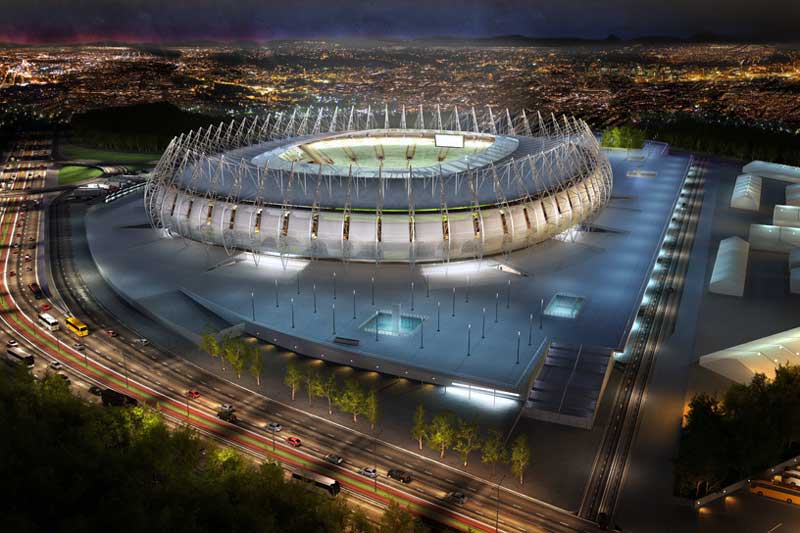
It is a football stadium constructed fully meeting the FIFA requirements, yet it transcends a sports arena into an entertainment center. Hosted inside are the modern music shows, product launches, workshops, lectures, graduation ceremonies, weddings, you name it. This week let us explore together Allianz Parque, feel the vibe of Brazil football and learn more of stainless steel.
Allianz Parque
Allianz Parque, located in Rua Turiaçu, west of São Paulo, is the home of Sociedade Esportiva Palmeiras, one of the first and most prestigious Brazilian sports clubs. The club, founded in 1914 under a different name, has won several championship titles for football matches played home and abroad and now boasts 1 million followers on its main social media.
Allianz Parque, as an architectural landmark in São Paulo, has won recognition both nationally and internationally with impressive awards, such as Digital Goal Award 2014, ESPN Award 2018, Real Estate Master 2023 and German Design Award 2025, to name just a few. The stadium is spacious enough to accommodate up to 45,000 people for football matches, 12,000 people for theater performance, or 55000 people for concerts as a multifunctional arena.
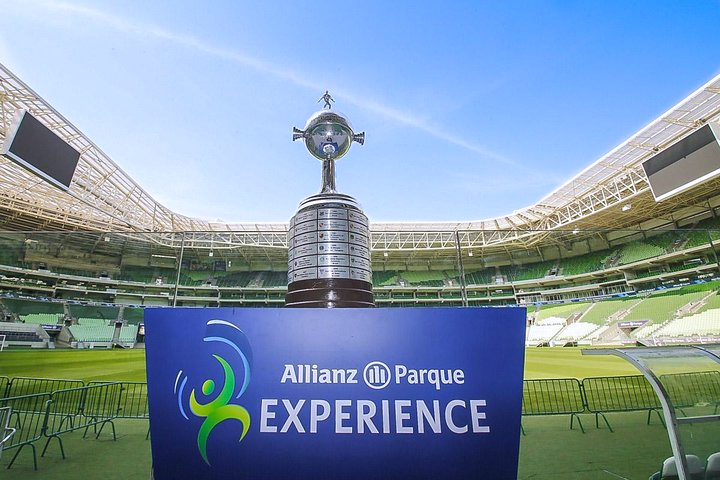
Background Information of Allianz Parque
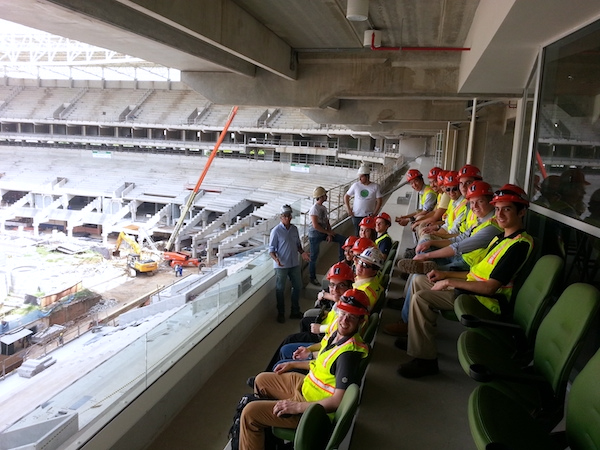
Allianz Parque was actually a renovation project, built at the same site where its predecessor Estádio Palestra Itália was standing, with 30% of the old stadium preserved. Due to the conflict with local authorities, WTorre Properties the real estate developer who fully fund this new stadium was only allowed for a renovation permit. Since the new Allianz Parque is way more spacious, most of the original one is covered without trace.
Demolition work of the old stadium started in 2010 and construction of the new one commenced in late 2011. With 4 years of hard work, Allianz Parque was officially opened in November 2014, with a total cost of roughly 600 million Reais (approximately 250 million US dollars). WTorre Properties as the sole funder has been entitled to ticket revenue for 30 years.
The name of the Allianz Parque doesn’t come in random but has been selected from a public vote. In 2013, Palmeiras announced a naming rights deal with the Germany insurance giant Allianz who would hold the name for 20 years at a cost of 300 million Reais (approximately 141 million US dollars). In May, Palmeiras fans were given a choice to select a name from Allianz Parque, Allianz Center and Allianz 360 via an online survey, and 89% voters selected Parque. It didn’t come much as a surprise under its historical context considering the old stadium had ever been nicknamed Parque Antarctica.
The Design of Allianz Parque
Allianz Parque was designed by Edo Rocha, an award-wining Brazilian architect known for integrating aesthetics, innovation and sustainability (Edo Rocha Architectures 2013-2026) into his architecture style. His focus on innovation and sustainability was exemplified by the project of Allianz Parque.
The use of stainless steel as façade material is both innovative and sustainable. Allianz Parque boasts the first soccer stadium to apply stainless steel façade in Brazil, though other stadiums built later like Castelão Arena have followed suit. Yet the modern design combined with its adaptability in terms of function, renders Allianz Parque an architectural landmark in the city of São Paulo.
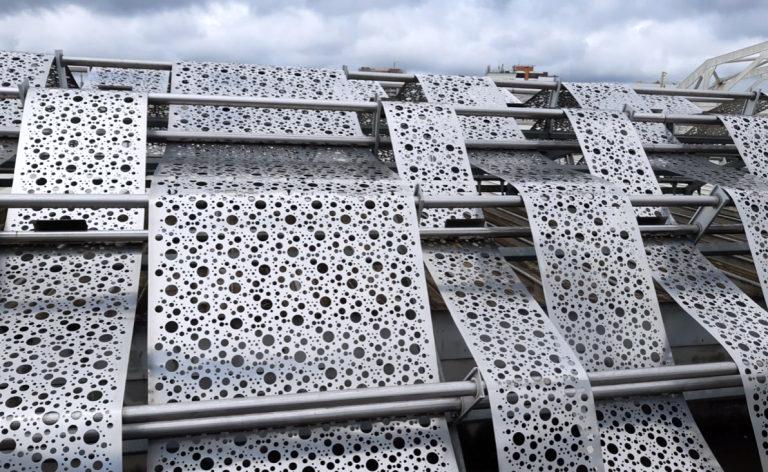
The outer fairing uses perforated stainless steel to deliver a strong armor with beautiful texture. It looks like a plot with hollow spaces. Thanks to the shape of a wicker basket, the stadium is energy efficient for nature and cross ventilation, meanwhile it can leverage rainwater to wash itself without extra maintenance over its long service life. The sustainable design meets the goal of silver LEED certification from WTorre Properties, one of the certified companies to bring LEED certification system by the United States Green Building Council to Brazil.
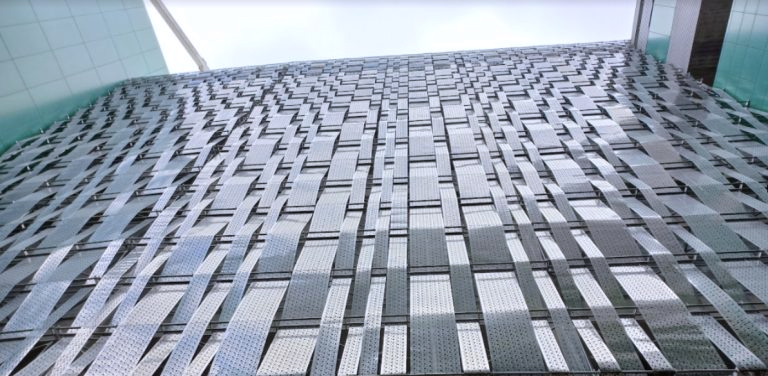
Stainless Steel Applied to Allianz Parque
Allianz Parque is the largest stainless steel architectural work in Brazil. The façade in a modern design, expresses contemporary architecture applied to the field of sports and entertainment. In addition to aesthetic appeal, stainless steel façade can provide great heat reflection and corrosion resistance, contributing to environment protection and sustainability.
According to ISSF (2025), 210 tons of stainless steel 444 including tubes and perforated sheets have been used for the façade. Grade 444, ferritic as it is, is of good corrosion resistance for the increased molybdenum and chromium (as below table indicated). Meanwhile, two stabilized elements of titanium and niobium have been added for enhanced weldability.
| C | ≦0.025 |
| Mn | ≦1.00 |
| P | ≦0.040 |
| S | ≦0.030 |
| Si | ≦1.00 |
| Cr | 17.5-19.5 |
| Ni | ≦1.00 |
| Mo | 1.75-2.50 |
| N | ≦0.035 |
| Ti+Nb | [0.20+4(C+N)]-0.80 |
In reality, according to an inspection report 10 years after its construction in 2024, stainless steel façade of Allianz Parque has zero corrosion and practically zero maintenance. Despite its location in a polluted environment of a large metropolis, the choice of stainless steel 444 proves a wise investment for least maintenance, high durability and excellent energy efficiency.
Stainless Steel Materials from CIVMATS China
If you are looking for stainless steel sheets from China, whether for perforated sheets or checkered plate with different patterns, CIVMATS will be your optimal choice. Stainless steel coils, strips of the same category (flat products) are also available in multiple grades and dimensions.
If stainless steel tubes are what you are after from China as in the case of Allianz Parque, CIVMATS will be ready for you. Long products from CIVMATS China also include stainless steel bars, wires and ropes. All stainless steel materials are customizable here from CIVMATS! Welcome for your stainless steel enquiry and purchasing! Choose CIVMATS, choose reliability.