
Overview
The case to be introduced is a mega public project which showcases how futuristic and modern-looking the government infrastructure could be like. Rotterdam Central Station never fails to catch the eye of travelers nor disappoints the architecture designers for a field trip. This week let us explore together the world of stainless steel from here on out.
Rotterdam Central Station
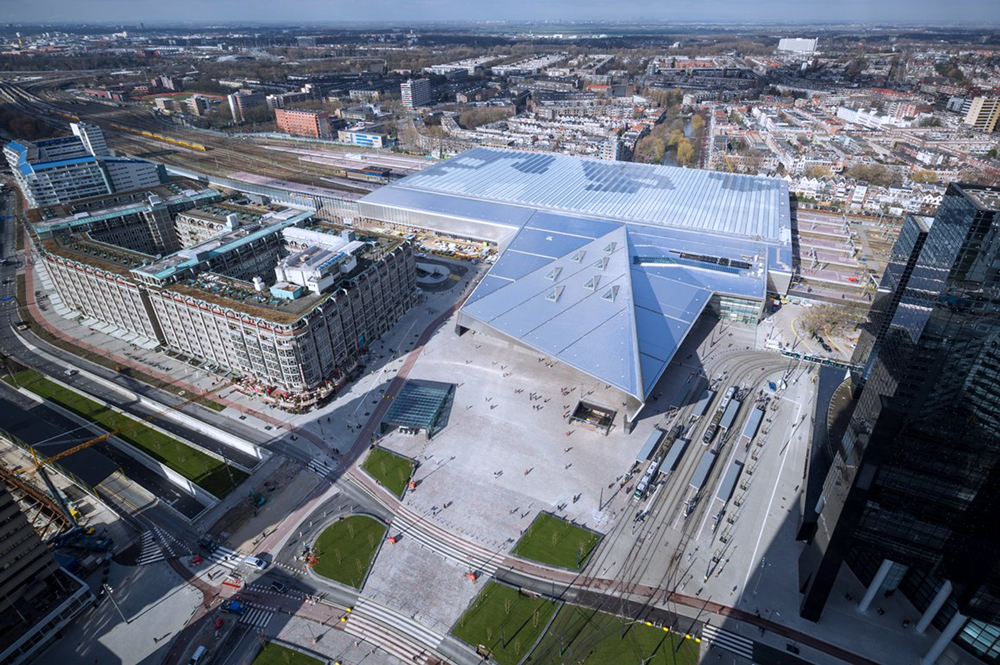
Rotterdam Central Station is an iconic public transport hub situated in Rotterdam, Netherlands. Featuring a building area of 50000 m2 (Archello 2026) from its northern Proveniersplein to the southern Stationsplein, it is spacious enough to accommodate 323000 commuters per day (IGG bouweconomie 2026) to take a bus, tram, subway or train (all in one entity).
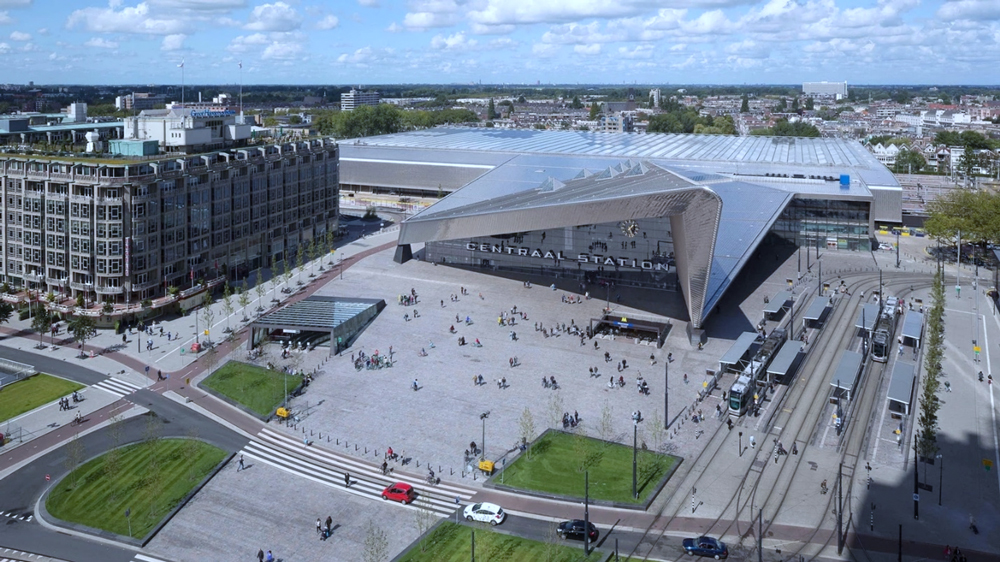
Also known as the international gateway to Rotterdam, Rotterdam Central Station constitutes a significant part of European transport network. It connects to Belgium, France and UK via high-speed trains. The two-way connection between the city and Europe makes it an important central hub and public gathering place for everyone.
Benchmarked against its counterparts such as the central stations of Madrid, Paris, London and Brussels, it is equally, if not more efficient, user-friendly, capable, and comfortable.
Background Information of Rotterdam Central Station
Rotterdam Central Station is a 10-year renovation (2004~2014) project, one of the most emblematic mega projects of the city for these years. Construction work spanned from 2008 to 2014. It has been the first of the six main railway stations transformed into a premium international public transport hub, contributing to the “High-Speed Line South” project envisioned by the Dutch government in the late 1990S (TEAM V 2026).
The development of high-speed railway line that run between Amsterdam, Brussels, and Paris and the projected increasing number of travelers from 110000 to 323000 in 2025 prompted the launch of the project of remodeling the central station. Whether in terms of capacity or design, building a new one became imperative.
The old station, designed by Rotterdam’s architect named Sybold van Ravesteyn, existed for 50 years since its opening in 1957 to its closure in 2007. Some of its historical elements such as the clock, the letters that spell the Central Station, and the two granite sculptures on platform 1 remained intact and reused for the new station.
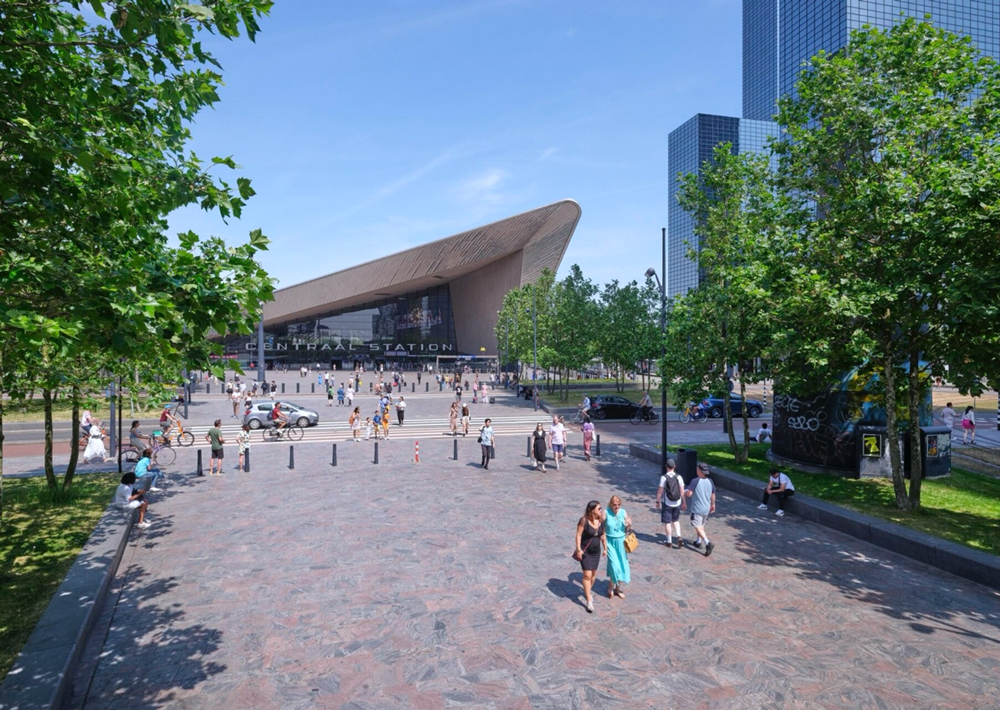
In 2003, Team CS was formed by three architectural firms, Benthem Crouwel Architekten, MVSA (Meyer en van Schooten Architecten) and West 8 to work jointly on the design of the station and its surrounds (MVSA 2026). In 2004, the team was commissioned to construct the new station. On 2 September 2007 the old station was closed forever. On 16 January 2008 the demolition work began and lasted until the end of March that year. On 13 March 2014 an official opening by King Willem-Alexander marked the completion of the new Rotterdam Central Station.
Design of Rotterdam Central Station
The new Central Station is not only an architecture marvel, but also a source of pride for the local residents. It seamlessly links the previously segregated areas on the north side and the south side under one canopy, creating a single entity for all its users.
The design integrates what was previously viewed as a barrier in the cityscape into a modern metropolitan Rotterdam on one side while emerging harmoniously into the urban landscape on the other side. On the city side, the grand gesture, or the tip of the iconic roof, points toward the heart of Rotterdam betokening a destination for high-speed international trains. On the north side, the station remains its modest appearance, in line with the style of its surrounding 19th century residential Provenierswijk area. The connection between the two sides is natural and seamless due to same grand roof above.
Stainless Steel Applied in Rotterdam Central Station
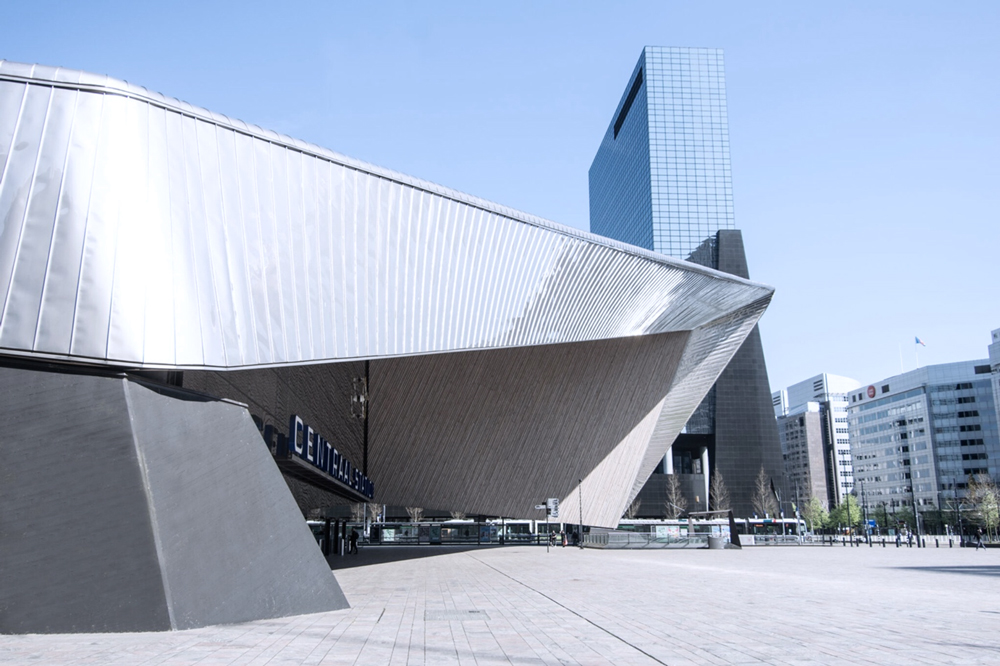
On the city side, the roof is clad with stainless steel to bespeak the innovative and progressive spirt of Rotterdam. According to ISSF (2025), there are 130 tons of 316L 2B finish stainless steel sheets of 0.5mm thickness used for the roof, amounting to 30000 square meters horizontally and vertically. 316L as the marine grade has been selected due to the excellent corrosion resistance against the local coastal and urban conditions. The easy formability is another plus for the mild slant of the roof.
Stainless Steel from CIVMATS China
If you happen to look for 316L 2B stainless steel sheet coil from China as in the case of Rotterdam Central Station, welcome to CIVMATS. Grade, dimension and finish are all customizable. All the stainless steel flat products conform to ASTM A240 & A480. Customization per ASTM A666 is also available.
CIVMATS also have the long products of stainless steel bars, pipe tubes, wires & ropes for your one-stop stainless steel purchasing experience in China. Choose CIVMATS, choose reliability.