
Overview
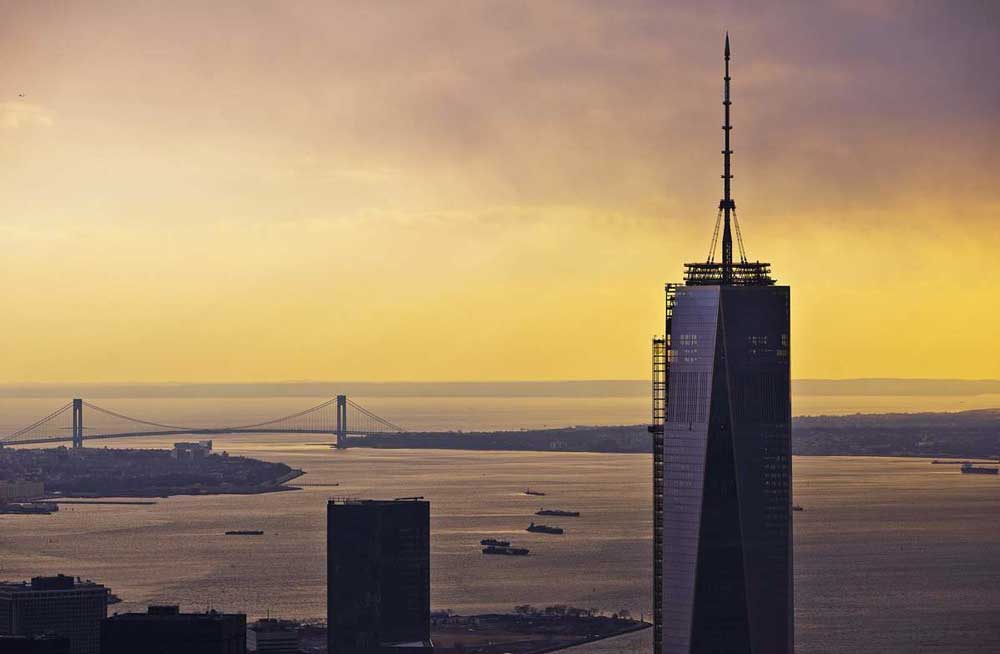
Standing as the tallest building in USA, One World Trade Center (One WTC) not only constitutes the power grid of Lower Manhattan but also symbolizes the great resilience of American in the face of a catastrophe. This week let us resume our exploration into the world of stainless steel through the case of One World Trade Center.
One World Trade Center
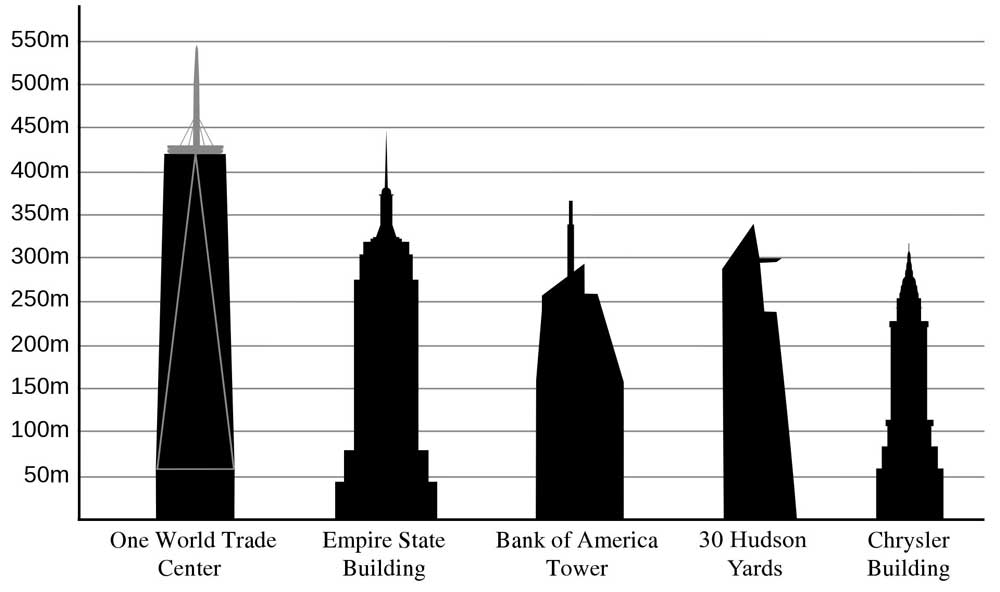
New York never falls short of famous skyscrapers, such as the Empire State Building and the Chrysler Building as introduced in our previous articles. There are also Bank of America Tower and 30 Hudson Yards that we haven’t covered. However, One WTC towers in the city skyline surpassing them all on height as illustrated by the table (Steelexplained 2024) as below.
One World Trade Center is a 104-level skyscraper located at 285 Fulton Street, Manhattan in Downtown New York. As a rebuilt project, One WTC is not built on the exact site of the original tower. Instead, it is in the northwest of it for the original twin towers have been designed to be two reservoirs complying with the wishes of the citizens.
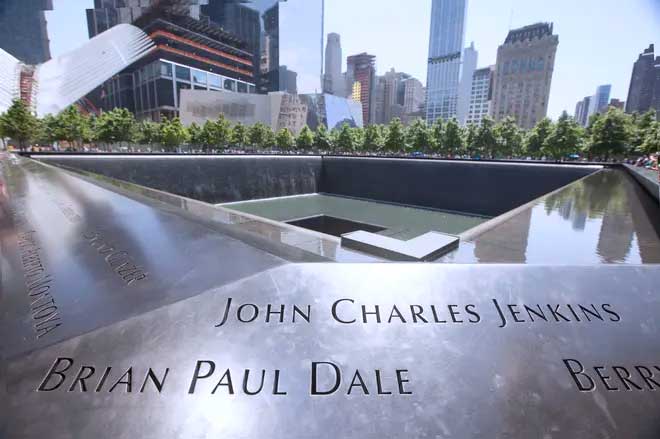
One WTC mainly serves as an office building with office space occupied from 20th to 90th floor. The first 19 floors are built as the protective base and the uppermost floor constructed with an antenna for sake of telecom communication. 90th floor above are mechanical floors, with observation decks and restaurants scattered from 100th to 103rd floor.
Also Known as Freedom Tower
Despite its official name, One World Trade Center is also known as Freedom Tower. It was the name initially announced for the project with meaning. However, the officials figured it “too evocative, too political and too loaded” (The Empire City Wire 2025) and they changed it.
Perhaps the history it carries can be too heavy to bear the name. In spite of this, New Yorkers and visitors tend to call it Freedom Tower in a more positive way. Now it is more associated with the height designed deliberately for One WTC.
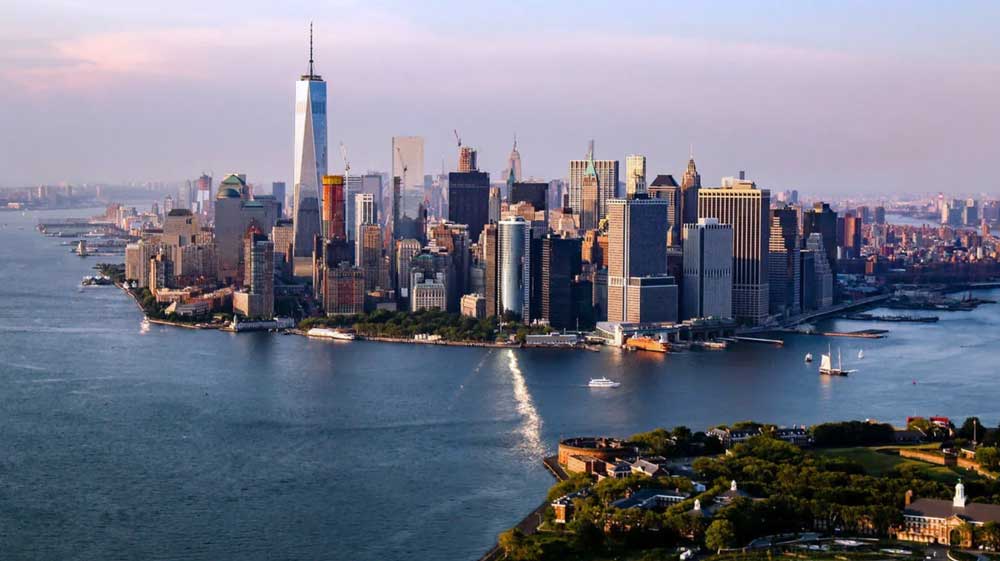
The official height of the One WTC is 1776 feet (or 541 meters), a nod to the year of American Independence and in echo to the torch of the Statue of Liberty (Studio Libeskind 2025). As the 408-feet (or 124-meter) antenna is counted into the height, the roof height is actually 1368 feet (or 417 meters), equivalent to that of the original World Trade Center North Tower.
Project Background of One World Trade Center
“We remember, we rebuild, we come back stronger!” The former president Barack Obama inscribed this sentence with his signature on one beam that would be placed on the top of One WTC during his tour at the construction site in 2012.
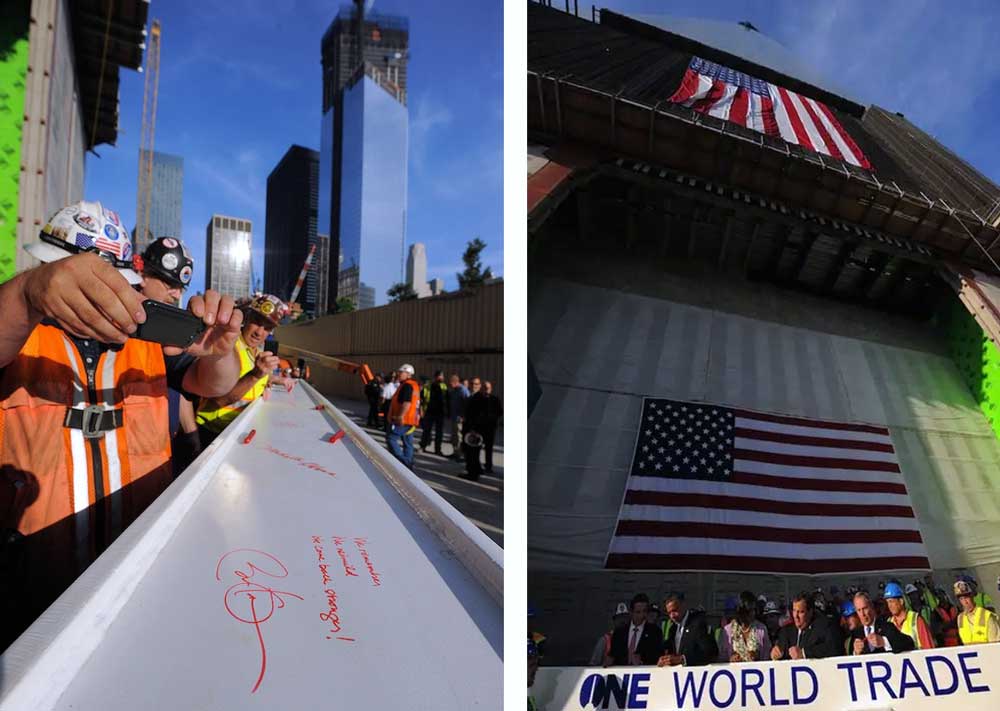
Brief as the sentence is, it speaks fully the background of One WTC. Just like the National 9/11 Memorial & Museum introduced four weeks ago, One World Trade Center constitutes partly the rebirth of Lower Manhattan following the devastating 9/11 terrorist attack. It can be the center of Libeskind’s Master Plan.
Libeskind’s Master Plan
In an international competition for the redevelopment of World Trade Center launched by the Lower Manhattan Development Corporation in 2002, Studio Libeskind’s proposal titled “Memory Foundations” was announced as the winning master plan.
Libeskind’s plan combined a glass tower as the tallest building worldwide with open memorial gardens standing for the “footprints” of the fallen twin towers. However, Larry Silverstein the developer didn’t favor the design. It went through several revisions until all that remained of Libeskind’s vision was the height of the building (Encyclopædia Britannica 2025). The final design by David Childs from Skidmore, Owings & Merrill (SOM) was unveiled in 2005. Although during the redesign of the tower, Daniel Libeskind ever worked with David Childs but did not participate into the final version disclosed.
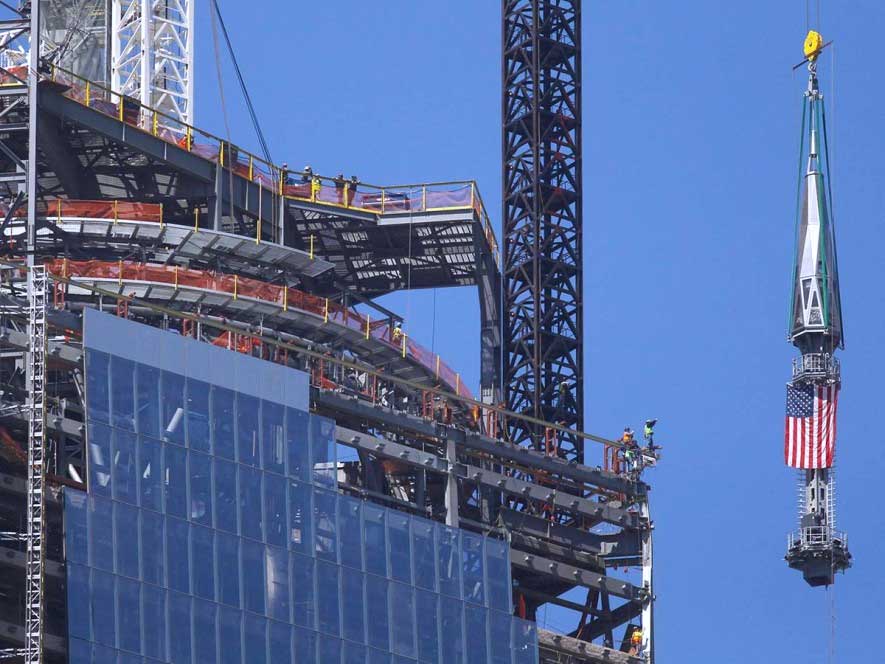
It was not until May 2006, five years after the 2001 9/11 terrorist that all the disputes from different stakeholders and the issues of funds, design, security were resolved, and the construction work was commenced. In May 2013 the final pieces of the antenna were hoisted into place for installation, marking the completion of One WTC. Even with some changes made for cost reduction such as replacement with an exposed bare antenna, One WTC cost 3.9 billion dollars, making it one of the most expensive buildings all over the world.
The Design of One World Trade Center
The core of Libeskind’s master plan is openness, light and memory (Studio Libeskind 2025), so the glass plays a significant role in reconstruction, justified by the pavilion and also One WTC.
David Childs, the chief designer wanted a building aspirational rather than defensive, so the curtain walls were insulated glass panels without intermediate mullions to provide optimal visual experience and daylight for occupants. The shimmering glass façade can reflect the moving sunlight and clouds in a dynamic way.
The base shape is a standard square at the same size (200 feet or 61 meters per side) as the footprints of the original towers and memorial pools. It is capped by another smaller square (150 feet or 46 meters per side) rotated 45°. In this way, the midpoints of the base square are the corners of the roof square, forming 8 giant elongated triangles through the shifting geometry. Due to the unique shape of the building, the tower can present different looks in different places in the city.
Stainless Steel Applied to One World Trade Center
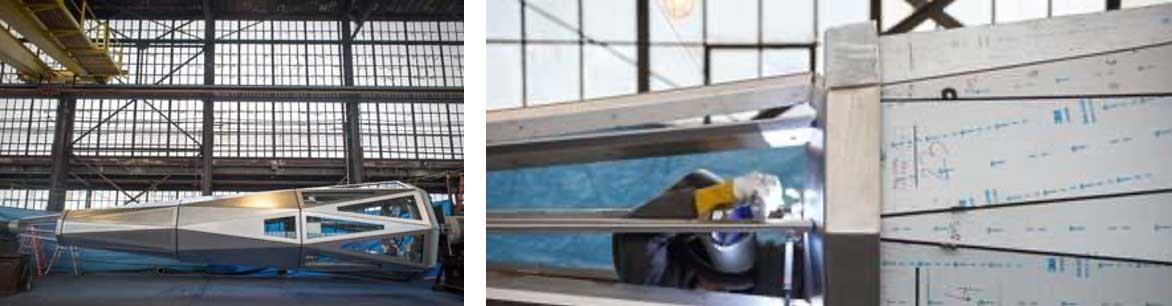
Unlike the famous buildings introduced before, the One World Trade Center is not featured with stainless steel façade, but insulated glass. The spire is where stainless steel is used. It is type 316L stainless steel which can handle costal environment with long service life.
Stainless steel was provided by ThyssenKrupp (TKE Elevator Press 2015) but not specified in detail. We deduced the materials supplied were laser-cutting friendly stainless steel sheets guided by exclusionary rule. Montanstahl GmbH contributed by providing special stainless steel profiles for the spire (Montanstahl AG 2019 - 2025) and the local workshop Kusack Architectural Metals did the welding and fabrication (Tim Heston 2013).
Stainless Steel from CIVMATS China
Whether you are looking for stainless steel materials in the form of stainless steel sheets or stainless steel profiles as in the case of One WTC, CIVMATS can be your most reliable stainless steel supplier from China. Stainless steel grades, dimensions, finishes and shapes are all customizable per your specific demands. Choose CIMVATS, choose reliability.