Overview
This is the world’s most expensive transportation hub. While considering it’s sitting on the world’s priciest island where skyscrapers of the highest rents abound, the costliest structure seems to be justifiable. It is in New York, a city where “If I can make it there, I’ll make it anywhere…”, as the song goes.
Yet it had been vehemently criticized for running over budget by almost twice by the time it was accomplished. Putting money aside, the project has won numerous awards, recognized for its contributions to design and urban infrastructure. This week let us explore the world of stainless steel through the case of the Oculus.
The Oculus
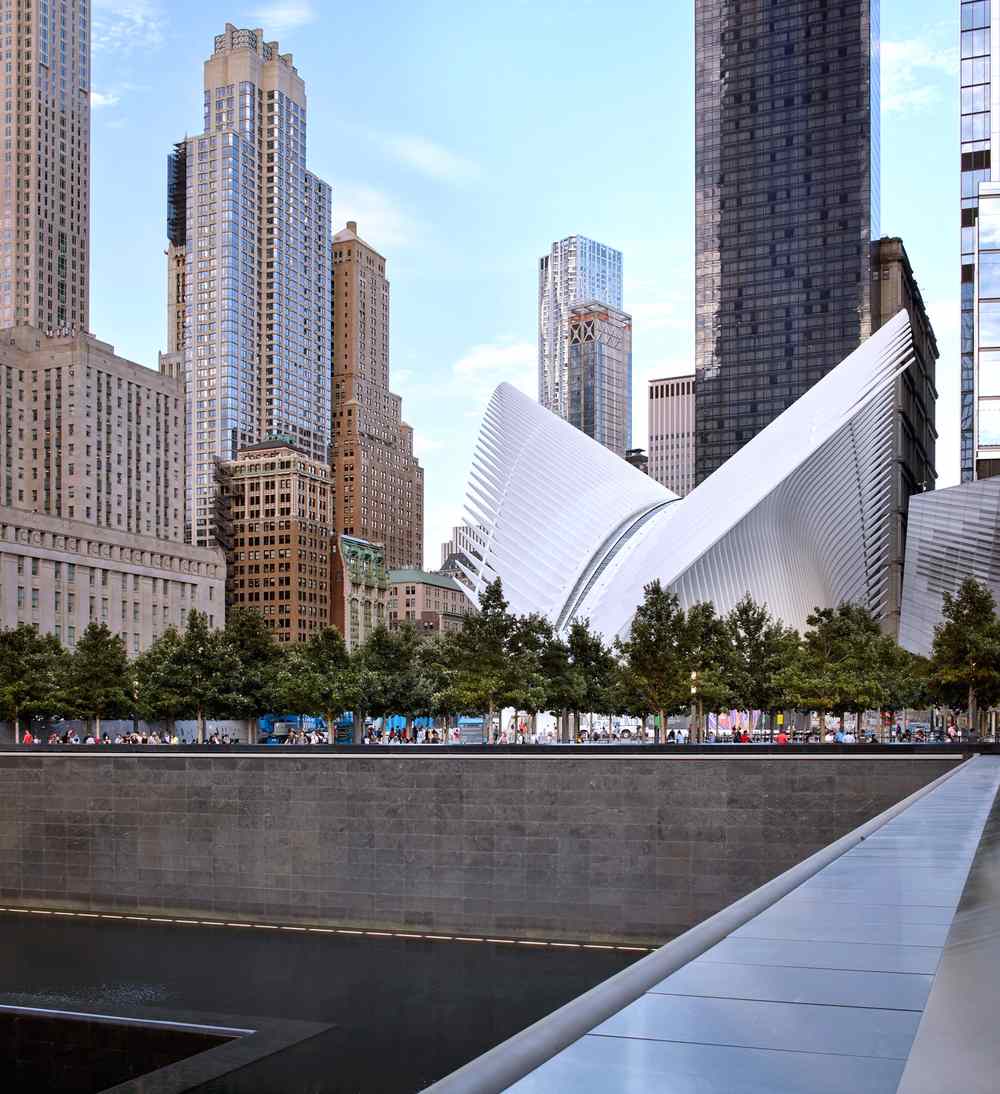
The Oculus, also known as world Trade Center (WTC) Transportation Hub, is situated in lower Manhattan, New York. Completed in 2016, the Oculus covers an area of over 800,000 square feet at the 16-acre World Trade Center campus, serving over a million weekday PATH commuters who travel through the station with quick access to the Wall Street and beyond.
Adjacent to the 9/11 Memorial & Museum, the Oculus provides pivotal links between various modes of transit, such as the PATH train connecting New York and New Jersey, the 12 subway lines across New York, the whole WTC campus (the National September 11 Memorial & Museum; World Trade Center Towers 1, 2, 3 and 4); Battery Park City Ferry Terminal, and Brookfield Place. It boasts the largest network of pedestrian connections below ground in the whole city.
Apart from the basic function as a transport hub, the Oculus also serves as a “living plaza”, a public gathering place where people can grab a cup of coffee and shop around. It possesses 225,000 square feet of retail and dining spaces and an underground passage leading to Brookfield Place, another shipping mall with more luxury brands. In addition, there are weekly programs ranging from farmers’ markets, art exhibits, musical performances to retail events for exploration.
Project Background of the Oculus
The Oculus is designated to replace the original PATH rail system destroyed on 11 September 2001. It consists part of the World Trade Center master plan by Daniel Liberskind which has been covered in the previous case of stainless steel applied to the 9/11 Memorial Museum Pavillion. They are all the components of WTC’s rebuilding in the wake of 9/11 terrorist attacks.
However, the controversy centering around the Oculus seems endless for it winds up with a colossal amount of money up to $4 billion dollars. The original proposal estimated to cost around $2 billion, already a massive cost. The pricey design cost, the cost to accelerate the construction pace, and the import material costs were the main contributors. Yet to aggravate the situation, the project was falling behind schedule. It took roughly 12 years to fully complete.
In January 2004, the design was disclosed by the Spanish Swiss architect Santiago Calatrava Valls, also the designer of the Oculus. It was not until 8 July 2008 the construction was literally commenced, when the first prefabricated “ribs” were assembled on site. The construction was initially expected to conclude by the end of 2014 or early next year and the opening scheduled for 17 December 2015. However, the actual opening was extended to March 2016 due to an incidental leaking roof.
Given the money scale and the delay, the Oculus had been heavily criticized for wasting taxpayers’ money as overpriced, over-stylized and behind schedule. Due to the controversy, what awaited ahead was a quiet opening. Pat Foye, the then director of the Port Authority, refused to host an opening ceremony for he was plagued with the huge financial cost, deeming it as symbol of excess. It needs to be mentioned that the Oculus and Transportation Hub are owned and operated by the Port Authority of New York and New Jersey.
The Design of the Oculus
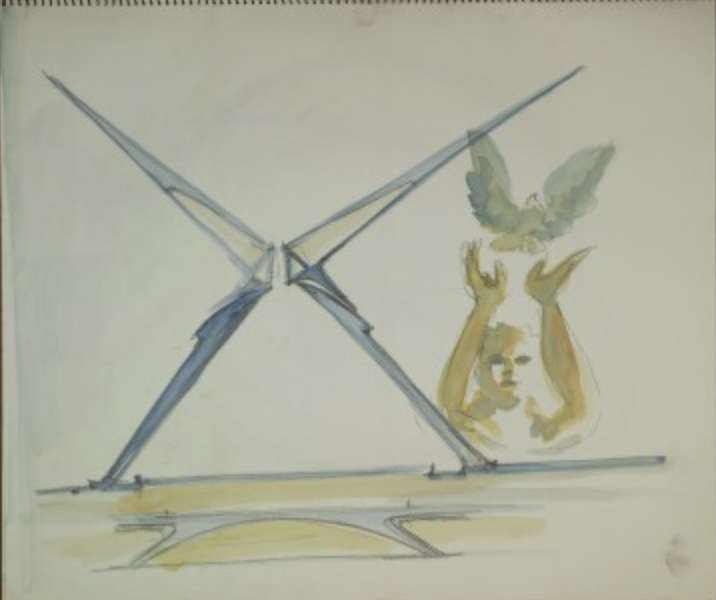
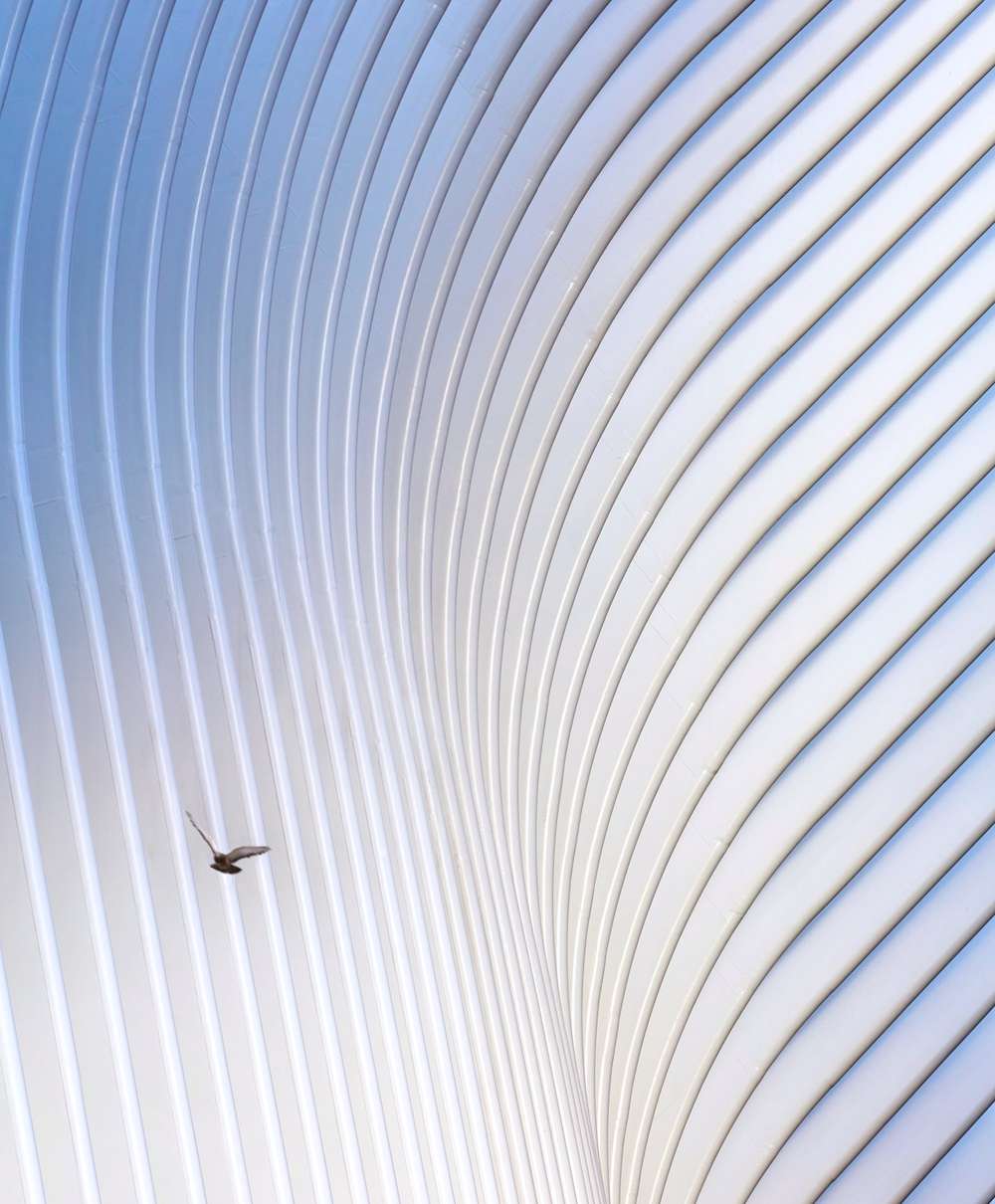
The Oculus was initially intended to be designed by Calatrava to look like a white dove in flight, with the inspiration drew from a child releasing a bird towards the sky (as the below photo). The modified design for sake of cost reduction could attribute to those descriptions as resembling dinosaur bones, turkey carcasses or white elephants. The huge sum of money overspent might also lead to complains over the shape.
Back to the design, the Oculus is a soaring wing-shaped steel structure with the exterior portion jutting out towards surrounding buildings. The two outstretched wings are symmetrical, but a different camera angle can lead to a distorted impression. If the exterior is impressive, the interior will be more intoxicating. The main hall feels like a white cathedral featuring a 330-feet-long movable skylight, which brings light down into the two underground floors, capable of inspiring hope at a site like Ground Zero.
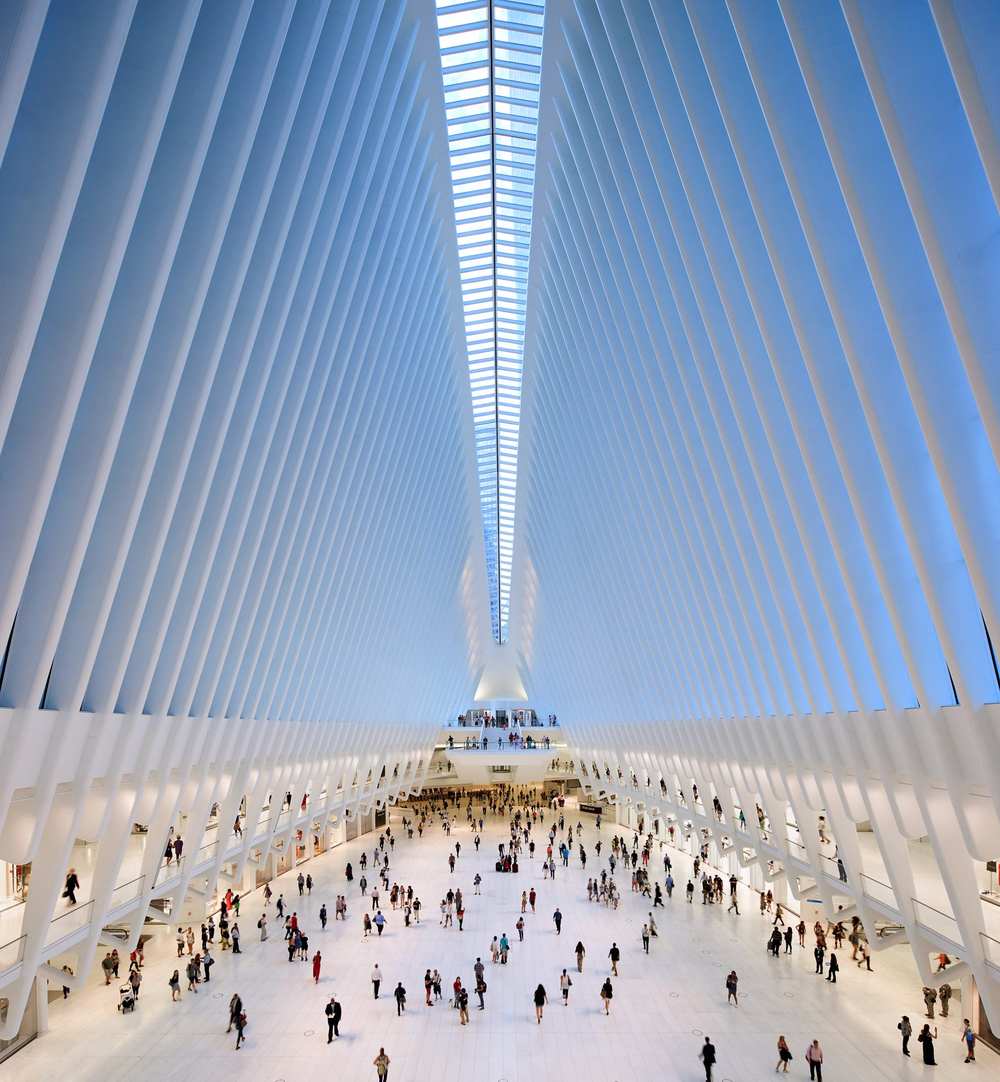
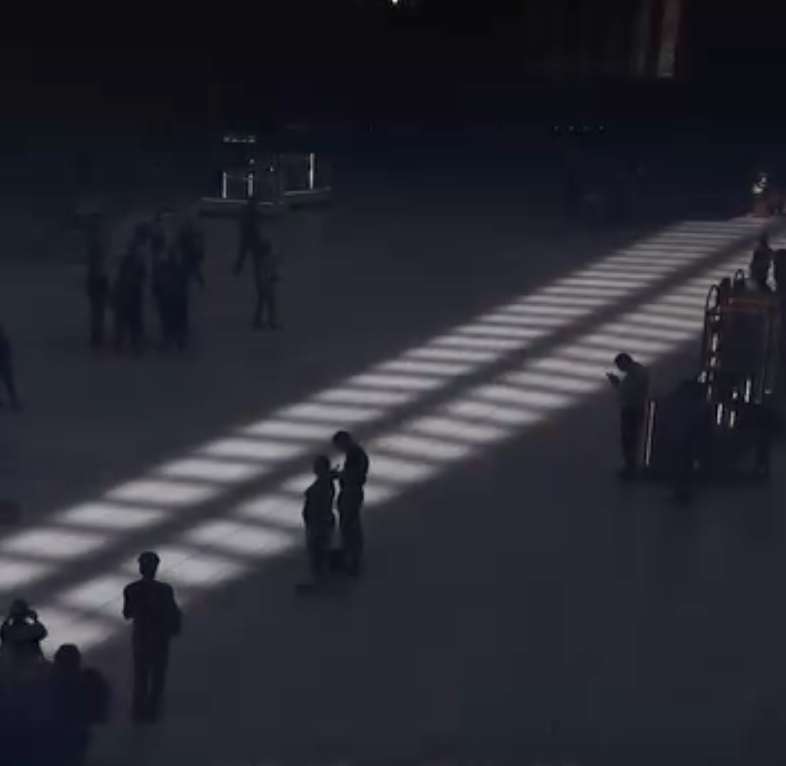
The opening in the roof not only brings light of hope and rebirth but also serves as a lasting reminder known as the “Wedge of Light”. Every year on September 11 when the weather permits, the building’s orientation will align squarely with the sun’s solar angles from 8:46 am. when the first plane struck until 10:28 am. when the second tower collapsed. As the skylight moves, it forms two parallel columns of light, recapturing the shape of the original twin towers. (FOX 5 NY, 2026)
Stainless Steel Applied in the Oculus
To pour light into the Oculus interior space below ground, the architect options for the column-free glass plus steel structure formed by the gently curving white ribs that rise from the underground to shape an elliptical dome, reaching a length of 350 feet, a width of 115 feet and a height of 160 feet. The structure employs 11500 tons of structural steel (Designing Buildings Ltd. 2026), fortified by 400 tons of Outokumpu duplex stainless steel plates LDX 2101 for enhanced strength and durability. The use of lean duplex (LDX) saves costs through a smaller plate thickness to create a light and soft texture. Meanwhile it reduces the lifecycle costs of the building. (Outokumpu 2026).
Duplex Stainless Steel Plates from CIVMATS China
If you are looking for duplex stainless steel plates from China as in the case of the Oculus, welcome to CIVMATS China. Whether for the lean duplex stainless steel 2101, 2304, common duplex S31803, S32205 (or duplex 2205), or for super duplex S32750 (or 2507), S32760, CIVMATS aspire to be your No.1 choice in China.
Our duplex stainless steel materials can be customized per shape, dimension, finish and mechanical properties. Feel free to inquire and purchase. Choose CIVMATS, choose safety and reliability from China.