
Overview
It is another LEED Gold certified project practicing the strictest sustainable construction standard, and moreover, it is the largest building illuminated with LED technology in Europe. This week we will introduce La Vela and the stainless steel application in this iconic architecture in Madrid. Now let us embark on a journey of discovery and learning.
La Vela, Madrid
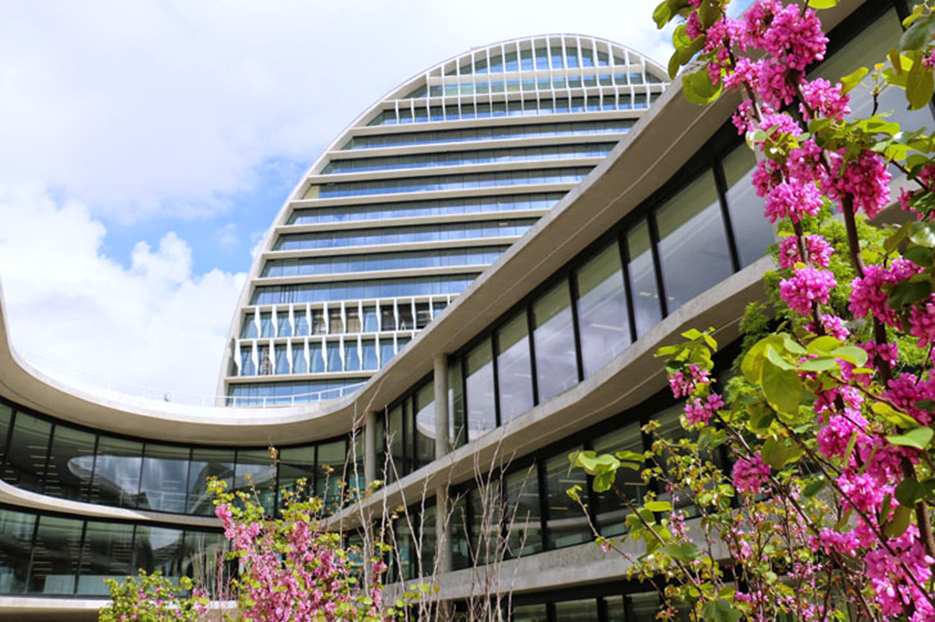
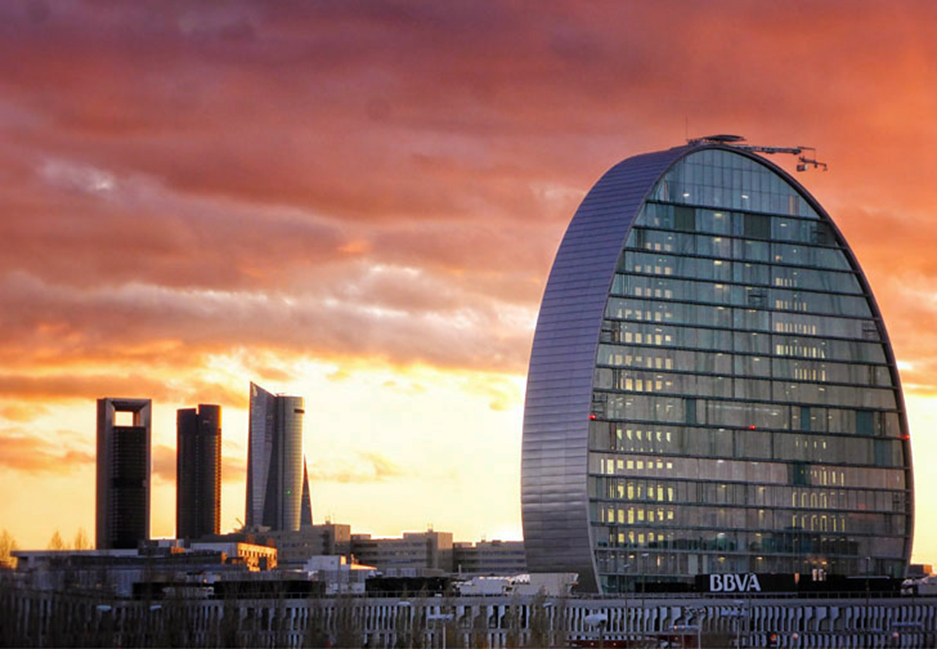
La Vela is a 19-story oval tower located in Las Tablas on the northern outskirts of Madrid, Spain. With its unique design, La Vela rises prominently as a new iconic Madrid landmark after the Four Towers. The 16-meter wide skyscraper is specifically designed with a highlight height of 93 meters as a nod to the Statue of Liberty of the same height in USA.
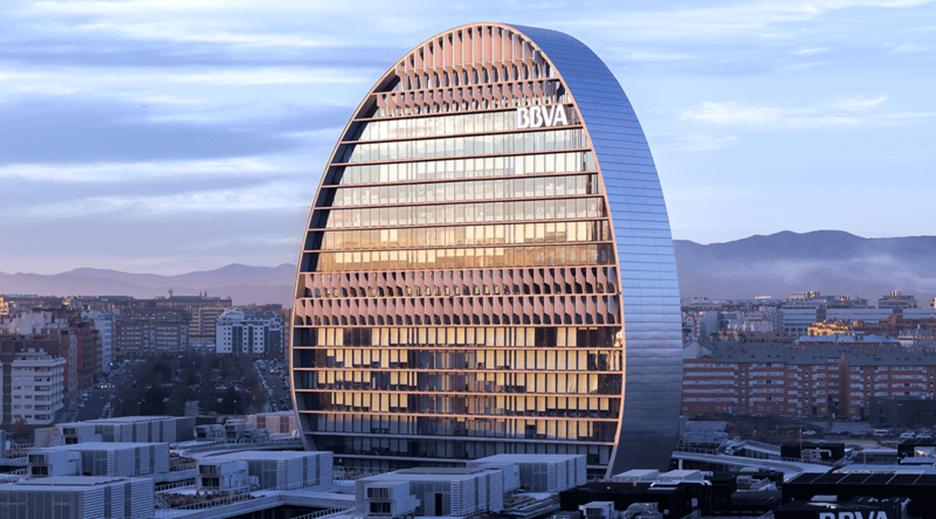
The official name La Vela (The Sail), has been given through a contest among the employees of the Spanish bank Banco Bilbao Vizcaya Argentaria (or BBVA) themselves. Due to its resemblance of a giant glass candle, it is also called BBAVA Candle. For those who criticize it for being ugly and capricious, they dub it “la tapa del vater” (the lid of toilet tank) (LÓPEZ-CASTRO PHOTO 2017).
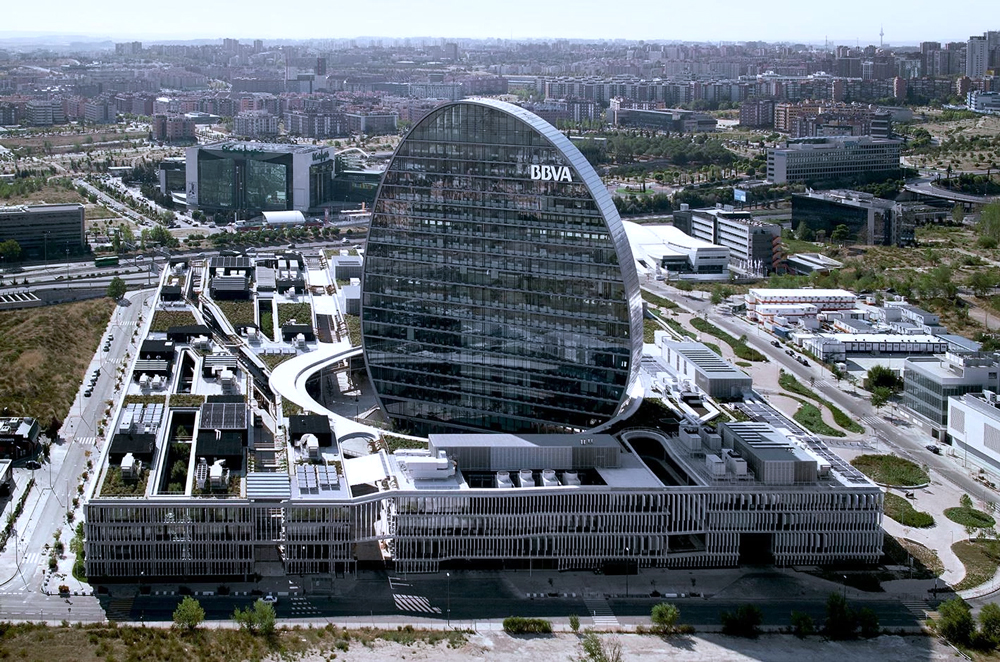
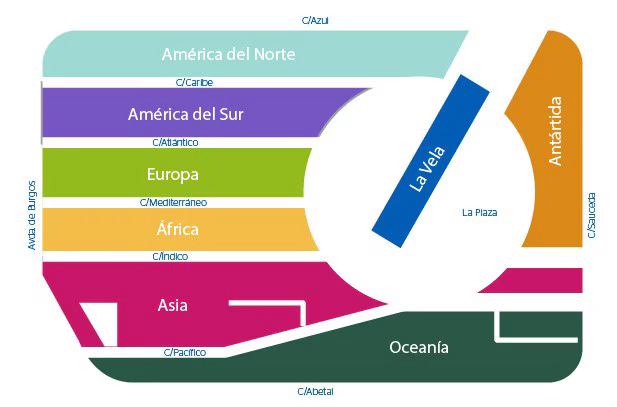
As the main building, La Vela is situated in the middle of a 100-meter plaza to signal the imposing presence of BBVA. The new BBVA headquarters also entail other seven three-floor horizontal buildings named after the continents, i.e., Oceania, Asia, Africa, Europe, Antarctica, South America and North America. Altogether they are known officially as Ciudad BBVA.
The Background Information of La Vela
La Vela stands out as the most emblematic building of Ciudad BBVA which is a 114000-square-meter complex equipped with complete infrastructure facilities such as a sports center, medical center and an underground parking lot with a maximum capacity of 3000 spaces.
Designed to accommodate 6000 employees, the complex is integrated into a “mini city” (or BBVA City) with two types of buildings diverged and converged by streets, cross walkways and the connecting ring that surrounds the square. In like manner, the five streets are named after the oceans as Caribbean, Atlantic, Mediterranean, Indic, and Pacific to convey the globality of the BBVA Group.
To plan for this project, BBVA decided to sell to GMP their symbolic buildings in town (ANNEKE 2015) and then bought the site. The project was announced in 2007 when BBVA gathered together international architects to design a new campus to centralize its employees that worked in different parts of the metropolitan area.
In 2008 the Group officially presented the project, announcing it would be completed in 2013. However, it proved a bumpy journey for the construction for the following reasons.
Firstly, the construction was commenced in 2010 (Editorial Arquitectura Viva SL 2026), but actually it was completed in 2015, two years later than projected.
Secondly, there were two disasters that complicated and delayed the construction work. In July 2013, the 14th floor of La Vela caught fire which devasted the main tower of the headquarters. In the wake of that, a 36-year-old worker died in an accidental fall from the fifth floor in January 2014. (vozpopuli.com 2014)
Thirdly, According to Juan Gomez from Archinect (2026), the budget for the project was 300 million Euros. In the end, the total cost amounted to 620 million Euros (vozpopuli.com 2014).
The Design of La Vela
La Vela was designed by the prestigious Swiss firm Herzog & de Meuron, the same architect of Beijing’s “Bird’s Nest” Olympic stadium. Driven by the site area which was surrounded by roads and in full urban expansion, and also in pursuit of LEED Gold Certification, the architect responded with a solution of integrating the existing buildings to the new campus to create a mini oasis city. The project was thus dubbed “a single building and a multifaceted town” (EMPTY 2025).
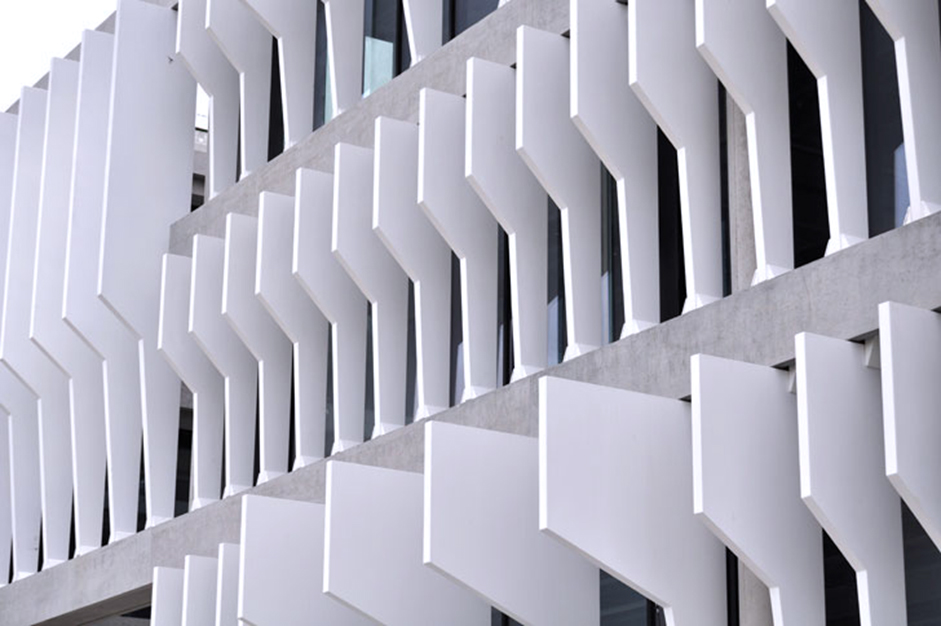
Inspired by the Arab gardens, the designer was ready to embrace Spanish culture and climate. The traditional Spanish courtyards in the city bring a strong Southern European vibe (Yodelight 2025). Given the topography, the façades of La Vela are oriented in a north-south direction to leverage on best climatic conditions. According to BBVA (2025), 49,000 m2 glass facades and 2800 brise-soleils are used to optimize natural light and provide outside views while blocking direct sunlight simultaneously.
To anchor the structure, these louvers are prefabricated into 20 different sizes. The size diversity as well as the non-uniform of arrangement creates the dynamic sensation of the façade. It feels the façade is changing with the sun and the shadow produced throughout the day (David Spence 2019-2026), but actually they are fixed pieces (METALOCUS 2026).
Stainless Steel Applied in La Vela, Madrid
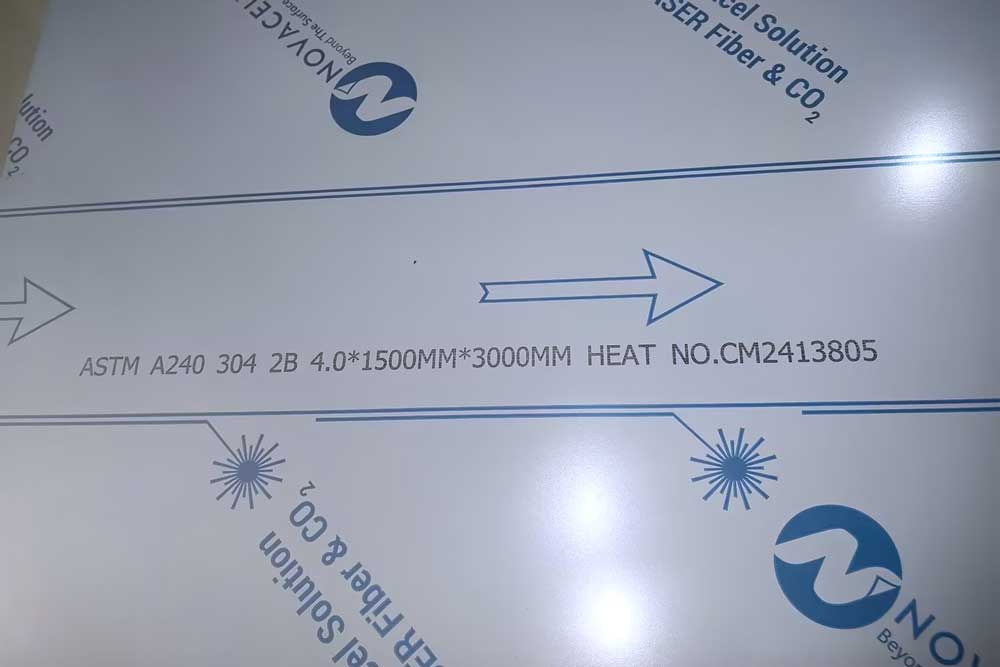
The shape of La Vela looks like an ovoid, but actually the geometry is constituted with 36 radiuses of curvature. The exterior of the curvature is covered with stainless steel plates (METALOCUS 2026). According to ISSF (2025), semi-reflective 2B finish 304L stainless steel plates of 0.8mm thickness have been selected for 1) smooth finish gives rise to self-cleaning properties. 2) sustainable material is conducive to LEED Gold awarding. 3) stainless steel 2B finish can reflect away infrared radiation in hot summer to reduce cooling requirement. 4) 2B finish can ensure light pollution at an acceptable level and keep away glares from drivers at the nearby motorway.
Stainless Steel from CIVMATS China
If you are looking for stainless steel 2B finish plates from China, choose CIVMATS. We have beyond grade 304L as in the case of La Vela. Grades and dimensions are customizable.
CIVMATS have exported stainless steel materials since 2016 with extensive professional knowledge and industrial experience accumulated. 100% quality guarantee. Choose CIVMATS, choose reliability.