Overview
It boasts the first positive-energy archive building in France and a pioneer in introducing a drying system into the archive management infrastructure national wide. This week let us resume our exploration into the world of stainless steel through the case of the Archives Départementales du Nord in Lille.
The Archives Départementales du Nord - Lille
The Archives Départementales du Nord, or Departmental Archives of the North in English, is situated on St. Bernard Street in the Esquermes district of Lille in France. Completed in 2013, the new building mainly serves as the archive stores, parallel to the administrative building restructured in 2004. It measures 70 meters long, 25 meters wide and 21 meters high, covering an area of 13000 m2 over its 8 floors, with 7 floors above ground and 1 basement underground as below drawing. (Mireille Jean and Frédérique Pilleboue 2015)
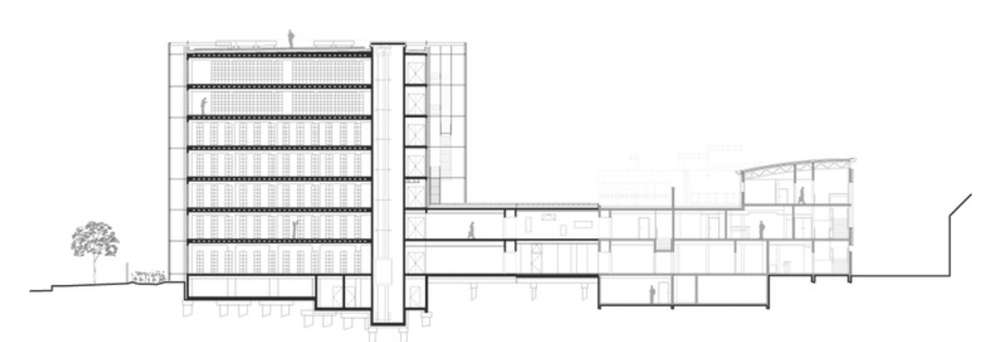
The Archives feature 80 kilometers of shelving capacity that is translated into 47 stores (over 9000 m2), 22 of which are fixed and 25 mobile. These stores necessitate no air-conditioning because of air treatment for energy efficiency. There are another two stores, one (200 m2) for maps and plans, non-air-conditioned, and the other (150 m2) for photographic documents, the only one air-conditioned. The basement is mainly used for installing the premises, such as the air treatment plant which makes possible the monitoring and control of them. There are also dusting rooms on each floor, spaces for workshops and a catering zone for staff. The whole building is served by two elevators.
Background Information of Archives Départementales du Nord - Lille
This new building constituted part of the second phase of the “third industrial revolution” launched by the General Council of the North, also the client, who decided to thoroughly modernize the obsolete and saturated facilities on the site selected in the 1950s. The first phase focused on the extension and restructuring of the administrative building which lasted from 2002 until the end of 2004.
The second phase came with demolishing the old 1961 deposit and rebuilding a new one, a positive energy archive building, the theme of this article. By the time the old depot was faced with a series of issues. 1) It was insufficient to meet the climatic requirements advocated by the Archives de France. 2) Its 25 kilometers of shelving was saturated, falling short of the rising demand. 3) Both the archives and the staff were exposed to security risks. 4) To aggravate the deplorable conditions were the previously innovative architecture design. The self-supporting metal structure was vulnerable to fire risks while the enormous glass façade induced undesirable light, temperature and humidity detrimental to the collections.
In 2009, two local architectural firms Zigzag and De Alzua+ won the design competition. The construction was commenced in 2010 and completed in 2013, delivered at a cost of 23.14 million Euro (DIVISARE 2026), well below the budget of 25 million Euro HT (Zigzag Architecture 2026).
The Design of Archives Départementales du Nord – Lille
The design is mainly driven by the demand of constructing a sustainable building of low-energy consumption, but it goes beyond that. Apart from the ultra-high performance, the building is aesthetically pleasing, inspiring and forward-looking. The highlight of the design can be illustrated from four aspects, the façade, the signal, the place and the energy performance.
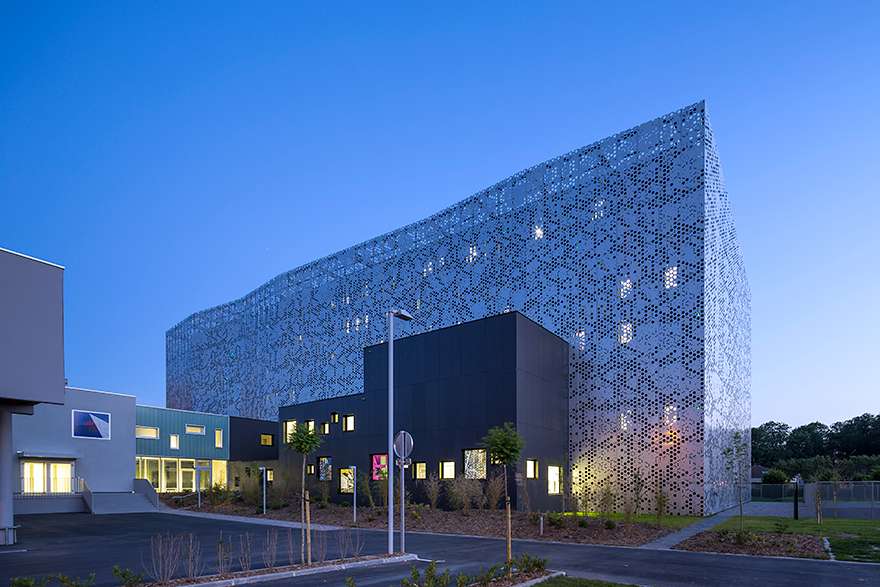
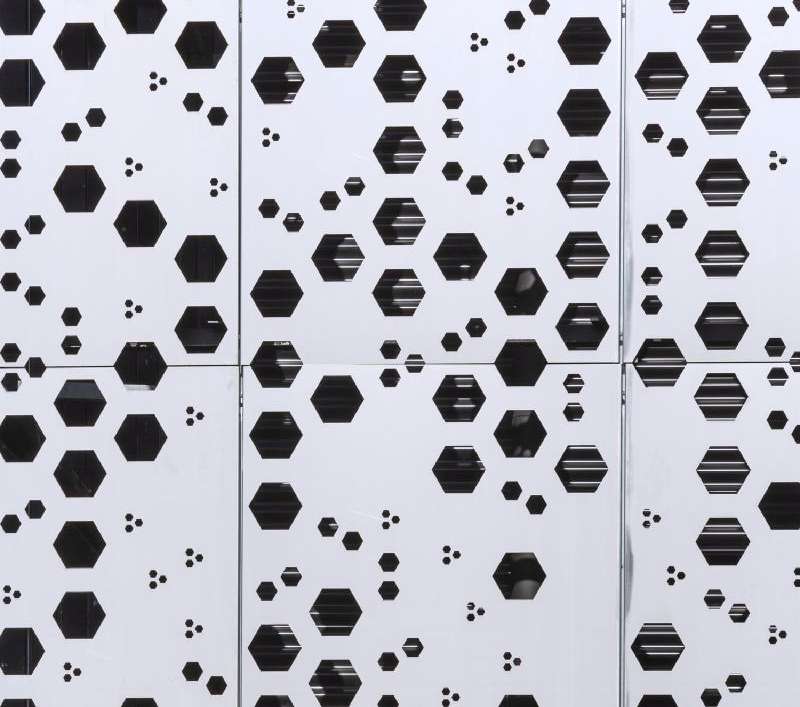
With its façade fully covered with a mesh, the building is hidden from its huge concrete silo inside and sheltered from direct sunlight. The perforation of the mesh is inspired by a papyrus, adding details to the appearance. Meanwhile, it acts as the solar filter to reduce unwanted heat gain of the building. The richness of the pattern itself also symbolizes the rich collections inside and the many activities hosted in this place.
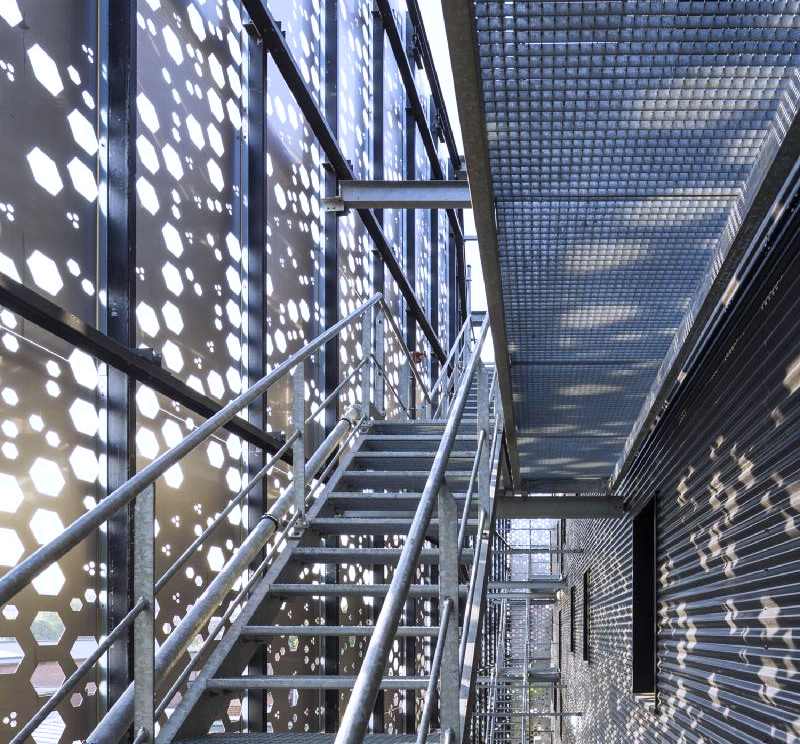
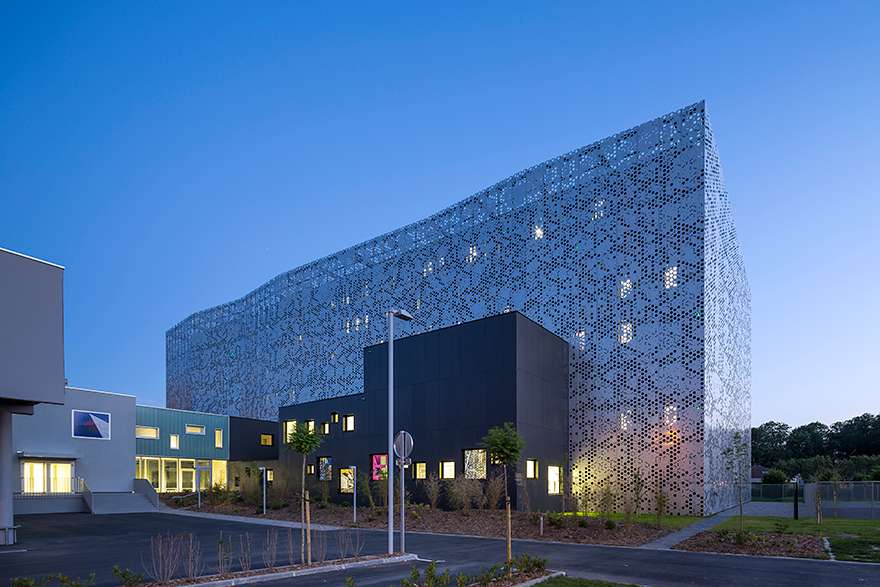
Despite its location behind the exiting building of offices, the Archives is easily seen from the Metz Boulevard and the St. Bernard Street due to its striking and homogeneous 7-story infrastructure. It stands undoubtedly as a signal in the city, which appearance varies with light. It is also a source of inspiration and creativity for achieve buildings of the same kind.
Through the reorganization of the place, the architect reconstructs the archive stores and workshops into two separate yet connected volumes, the seven-floor main building used for archive stores and the second two-floor volume as the workspaces. Meanwhile, the second volume links the archives with the existing buildings as an interface. In this way, the design makes possible an easy access to the place and a better working environment.
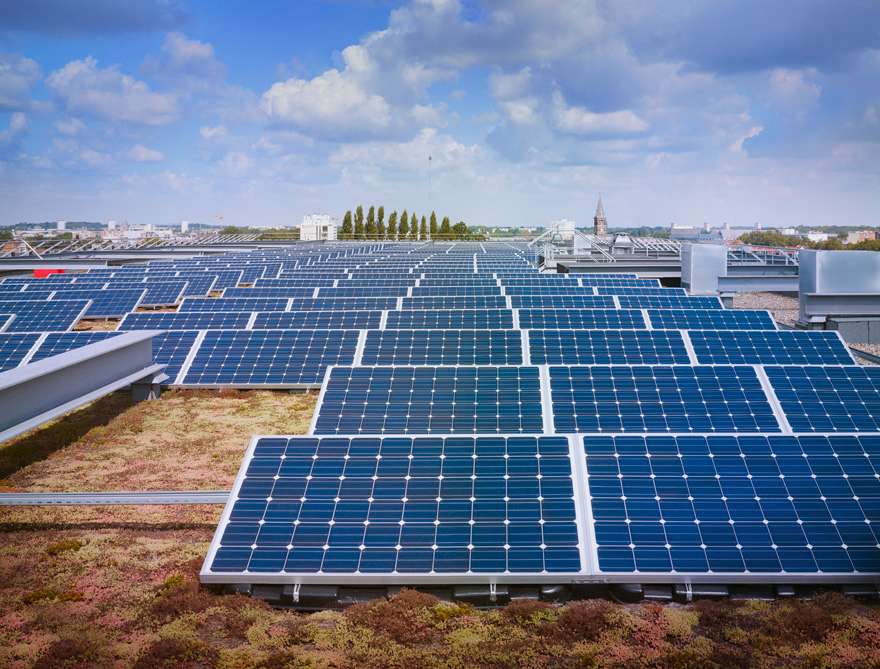
Speaking to the energy performance, which is the primary demand from the client, the architects come up with a solution of technical innovations, such as an air-drying system, first in France plus 300m2 of photovoltaic panels on the roof. On top of that, the composition of the walls come together to make the building as hermetic as a thermos bottle with optimal energy conservation.
Stainless Steel Applied in Archives Départementales du Nord - Lille
The mesh enveloped the entire building is made from 304 perforated stainless steel sheets. There is 4000 m2 of stainless steel mesh used for the façade. (Mireille Jean and Frédérique Pilleboue 2015). According to ISSF (2025), the perforated stainless steel mesh is manufactured by Aperam in Uginox Mat finish, a kind of matt surface which can reflect the urban lights surrounded.
Stainless Steel Materials from CIVMATS China
If you are looking for 304 stainless steel perforated sheets from China as in the case of the Archives Départementales du Nord in Lille, welcome to CIVMATS China. Patterns, grades, dimensions are all customizable.
CIVMATS specialize in stainless steel materials including flat products stainless steel coil strip sheet plate, and long products stainless steel tube pipe, bar, wire & ropes. Feel free to inquire and purchase. For stainless steel materials in China, we aspire to be your NO.1 choice. Choose CIVMATS, choose reliability and safety in China.