
Overview
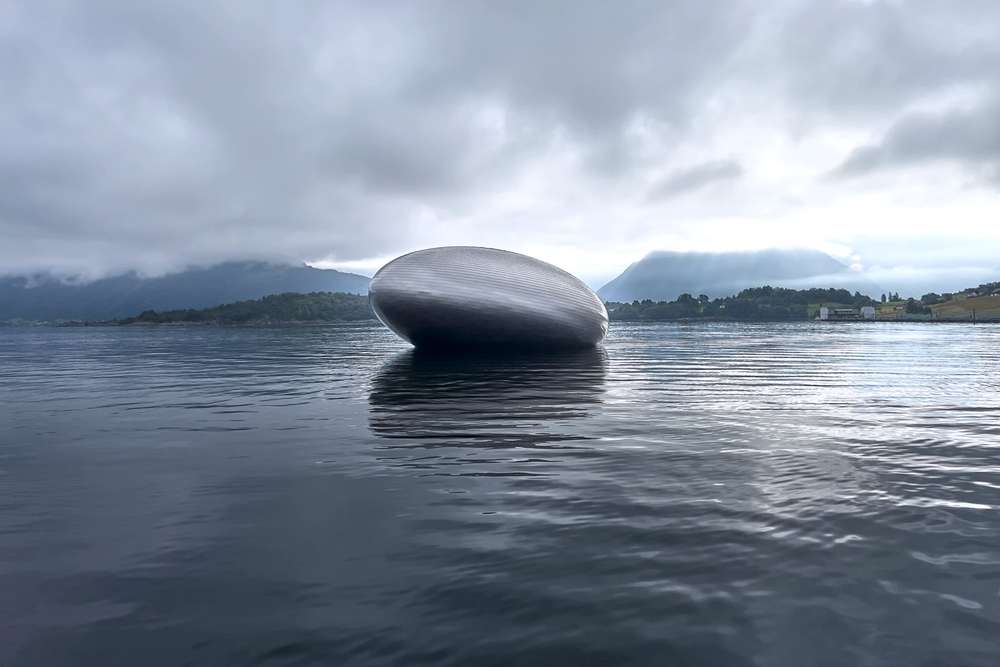
The sight of blue sky and the vast expanse of water, be it fjord, lake or sea, tends to bring us peace of mind. While admiring the beautiful scenery, we feel equally hard, if not more, to take our eyes off the adjacent human creations, just like the magnificent Salmon Eye introduced in the preceding article.
Our pursuit of beauty and knowledge shall never cease, that’s how we are on another journey. Here comes Queenscliff Ferry Terminal, Australia’s largest vehicle ferry service. This week let us delve into the world of stainless steel through this award-winning project and witness together how great design transcends the limit of traditional function-oriented ferry terminal in Australia and beyond.
Queenscliff Ferry Terminal
Opened in April 2023, Queenscliff Ferry Terminal is a two-story terminal building located in Wadawurrung Country, providing cars and passengers ferrry services that links the east and west sides of Melbourne’s Port Phillip Bay at Queenscliff and Sorrento, two popular holiday towns in Victoria.
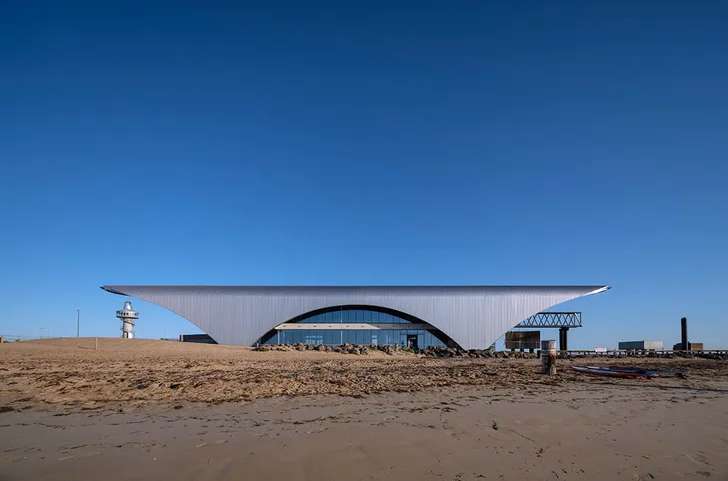
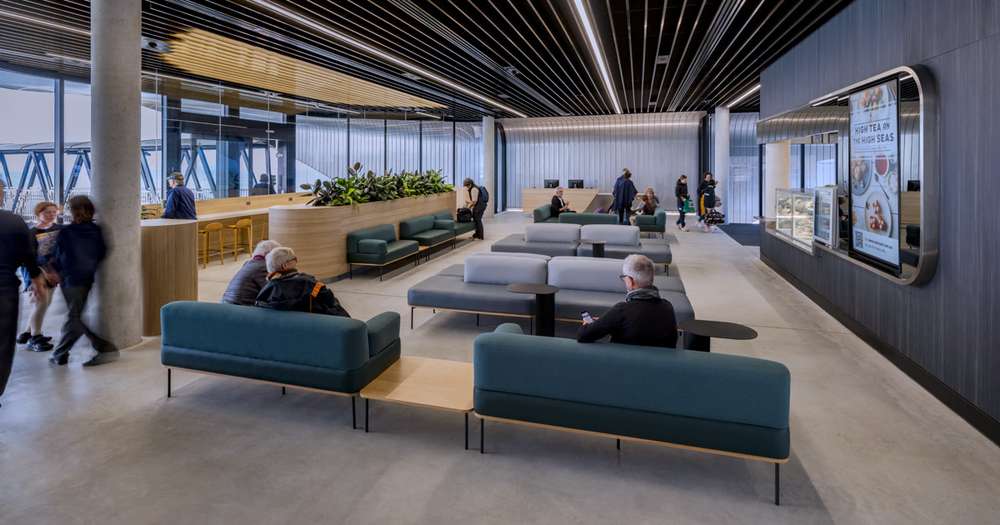
The newly-built terminal features high efficiency and tremendous capacity, with the ground floor used to load and unload vehicles and the first floor for embarkation and disembarkation of people. The Terminal is well equipped with modern facilities such as a café and restaurant, two bars, a passenger lounge, a retail space, and other function spaces. A new public boardwalk and gantry are also added subsequantly for enhanced passenger experience.
The Background Information of Queenscliff Ferry Terminal
Queenscliff Ferry Terminal is a redevelopment project by nature, but it necessitates the complete removal of the existing terminal (as below photo) for the construction of this new one. The success doesn’t come cheap and easy. Quite the opposite, it takes a 10-year Masterplan at a cost of $16 million dollars (Kane Constructions Pty Ltd 2026), among which, Australian Government contributes $10 million under the Geelong City Deal with the balance paid by the client Searoad Ferries, the operator of the ferry services.
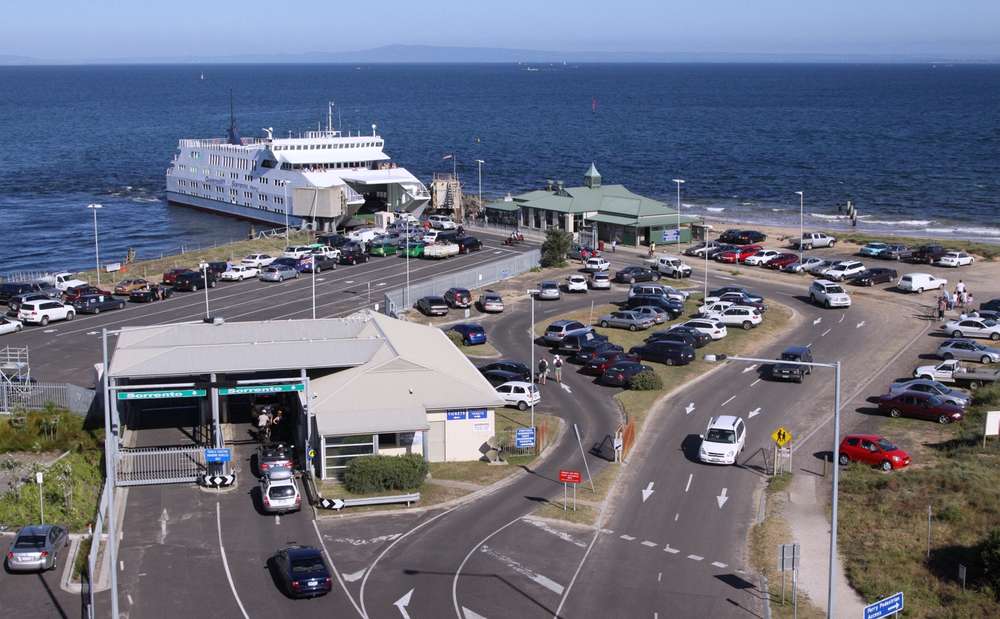
The Geelong City Deal covers a series of initiatives to financially support the economic transformation taking place in Geelong which boasts one of the Australia’s fastest growing cities. The funds, provided by the Australian and Vicrorian Governments, as well as the City of Greater Geelong will be invested on diversified economic sectors in Geelong. Queenscliff Ferry Terminal (the newly built as below photo), which epitomizes the gateway to Geelong, is one such investment aiming to deliver modern facilities, better access, and boost local tourist economy with more reatil and emloyment opportunities. In the end, the project created 71 jobs during construction, 22 more permanent jobs associated with the operation of the ferry and the terminal as well as indirect jobs driven by tourism (Victoria State Government 2026).
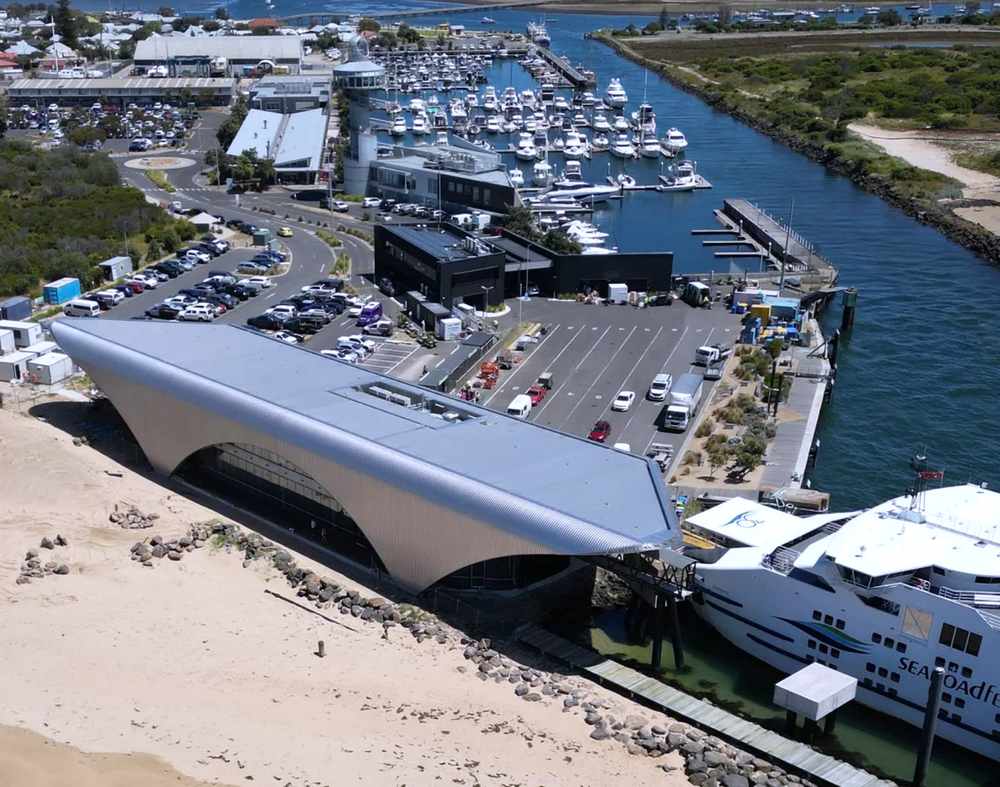
Since its operation in 1987, there have been 960,000 people and 250,000 vehicles using the ferry serive annually, making it the busiest one in Australia (State Government of Victoria 2023). With time, the existing facilities become degraded and insufficient to handle the increasing passengers, especially during the peak summer season and holiday periods when the number of people can climb to 10,000 per day. Building a new terminal has thus been put on the agenda.
The Design of Queenscliff Ferry Terminal
Queenscliff Ferry Terminal, designed by F2 Architecture, is undoubtedly a landmark recognized internationally for winning the global architectural award - the Architectural Masterprize, and some other design and construction awards nationally.
The concept is to build a landmark building to serve more passengers at high efficiency and with great quality. Meanwhile, in a broader sense, the community development, local history, and the natural and built context should be considered as well. In response, F2 Architecture, translates the concept into a simple linear arrangement, pivoted on arrival and departure spaces within an arched sculpture.
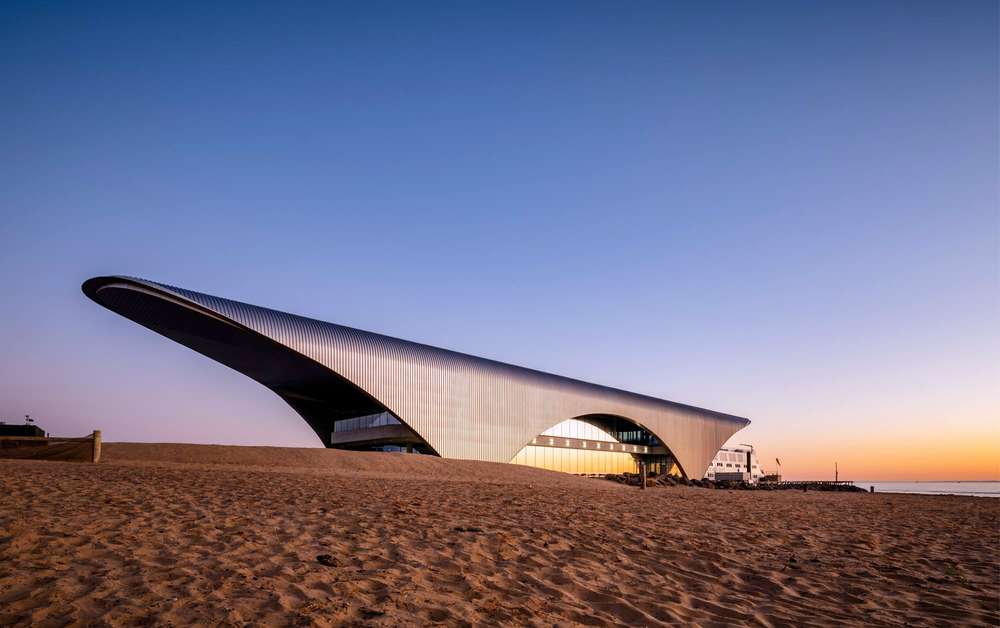
The overarching sculptural roof consists in the focal point of the whole design, which is not only aesthetically appealing, but also versatile in terms of function. For it (Creative Victoria 2026),
• Frames passage, public zones, paths, views, and local rituals.
•
Offers shelter from the harsh maritime environment.
•
Engages the coastal landform and historic shed.
•
Hides rooftop plant equipment and screens the passenger gantry.
•
Consists an efficient and cost-effective structure appropriate to the environment.
•
Achieves the large cantilevers in an elegant and efficient way.
Sustainability is also underpinned in design details, such as 1) protection of local eco-systems by regenerating costal sand dunes and native vegetation, and building on-site sewerage treatment plant; 2) the broader siting and urban design like linking existing coastal walking paths to the surrounding pedestrian traffic; 3) energy efficiency through passive thermal design and dynamic thermal modelling; 4) and above all the selection of building materials which will lead us to the very core of this article just in next paragraph.
Stainless Steel Applied in Queenscliff Ferry Terminal
Speaking of Queenscliff Ferry Terminal, the selection of stainless steel material adds a sense of timeless elegance to the look, meanwhile the durability, least maintenance requirement and recyclablity embodied by stainless steel ensures a long-term sustainability. To minimize carbon footprint, the material is manufactured locally.
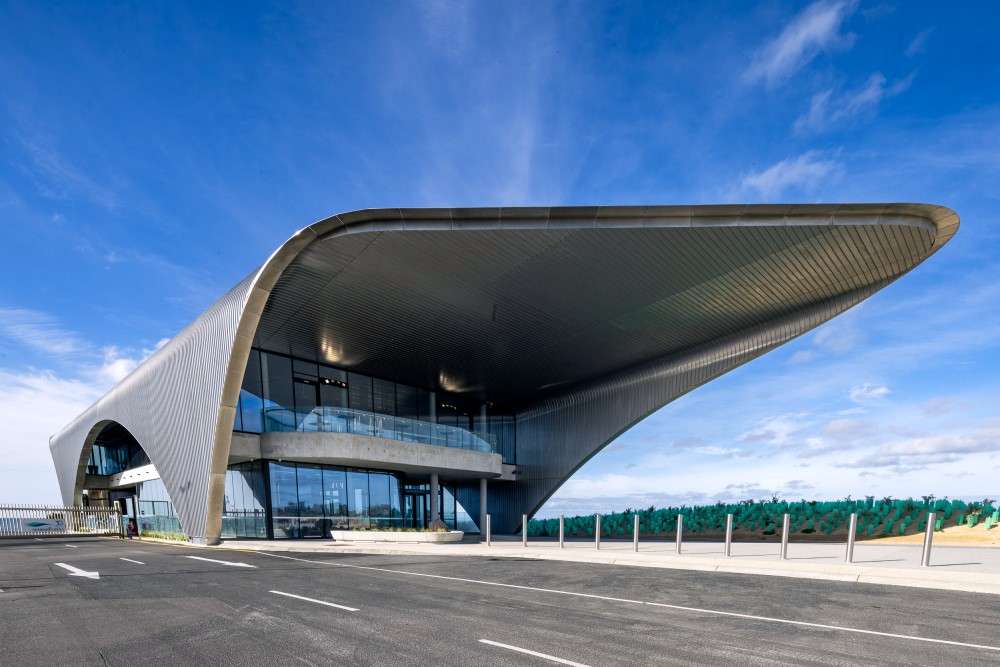
According to ASSDA (2023), 445M2 ferritic stainless steel sheet of 2DR finish and 0.7mm thickness has been employed to make the building roof and façade cladding for it is perfectly suitable for the purpose in marine environments. 445M2 is developed in Japan but popular in Australia with a suceessful track record.
A high content of at least 22% chromium and 1.2% molybdenum gives 445M2 stainless steel excellent corrosion resistance. In constrast with marine grade 316, it is even more resistant to atmospheric corrosion and pitting corrosion in chlorides-contained water. When properly welded, 445M2 stainless steel is free from stress corrosion cracking or intergranular corrosion. Add to that, ferritic stainless steel features lower expansion coefficiency than 316. Moreover, it can be readily cut, bent, fold, shaped or welded.
For the above reasons, 445M2stainless steel is called new marine grade or a cost-efficient alternative to marine grade 316. Below table lists the chemical compositions of 445M2 and 316 for direct comparison (Referenced from AZO Materials 2026),
| Chemical Composition (%) | |||||
|---|---|---|---|---|---|
| Grade | C | Cr | Ni | Mo | Others |
| 445M2 | 0.01 | 22.1 | … | 1.2 | Nb & Ti |
| 316 | 0.05 | 16.2 | 10 | 2.2 | … |
Stainless Steel Material from China
If you are looking in China for cold rolled stainless steel sheets for roofing or façade cladding as in the case of Queenscliff Ferry Terminal, or related flat materials such as stainless steel coil, strip, plate, welcome to CIVMATS China. Grade, finish and mechanical properties are all customizable.
CIVMATS also produce long products such as stainless steel pipe tube, bars of varied shapes, wires and ropes. For stainless steel material from China, choose CIVMATS, choose reliability and safey.