
Overview
While we lament over the lost lives of innocent people in the catastrophes, the way they get remembered and presented in history also matters. This week we will introduce the National September 11 Memorial & Museum, one of the most visited destinations in New York USA. It is worth exploring beyond the stainless steel application in the Pavilion. Stainless steel in which CIVMATS specialize just brings us to the same journey together. Let’s explore now.
The National September 11 Memorial & Museum
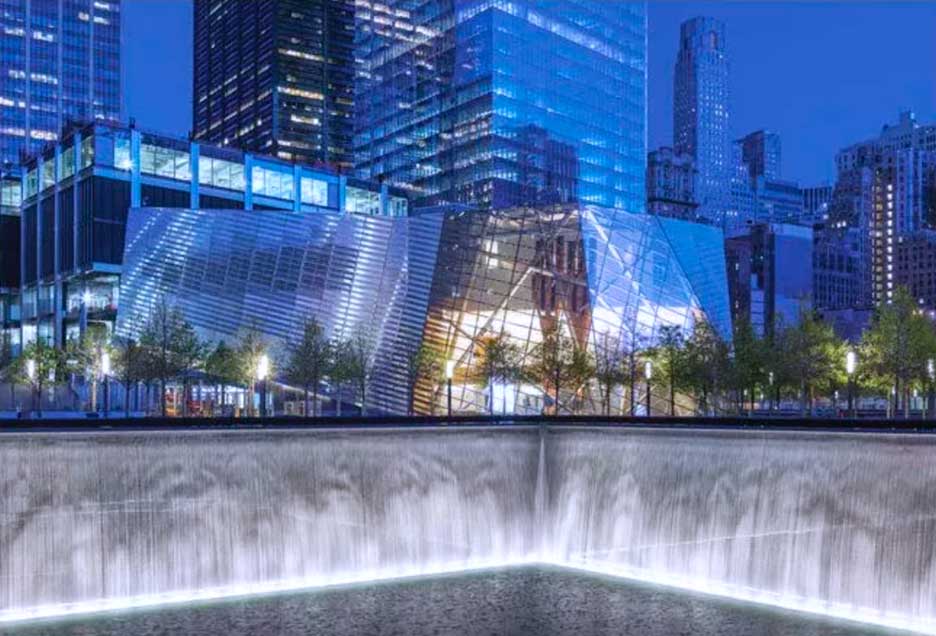
The National September 11 Memorial & Museum is located at the World Trade Center site in lower Manhattan, New York city, USA. The Memorial & Museum actually includes three areas, 1) the Memorial Plaza (or the Memorial Park) constituted with two fountains in the footprints of the Twin Towers and the white oaks 2) the underground Museum 3) the Museum Pavilion (also the Atrium or Hall Memorial Museum).
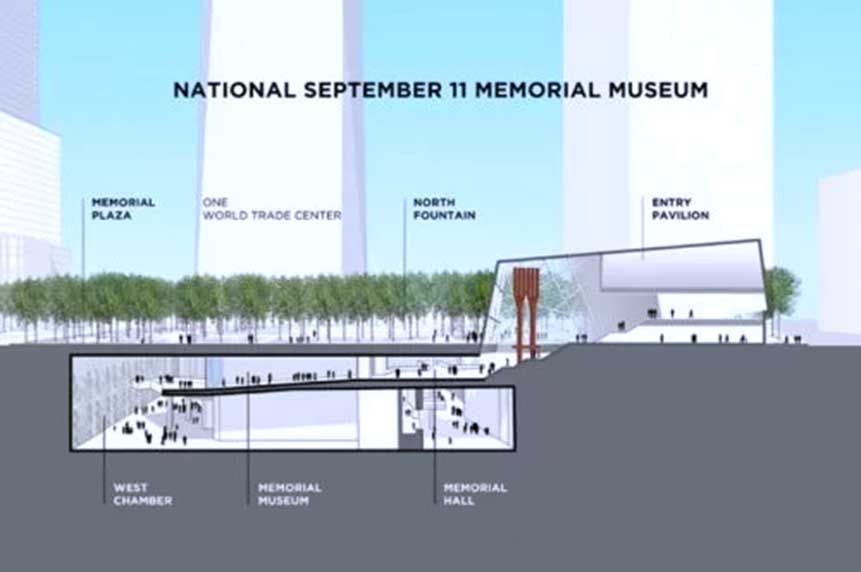
Although the Pavilion constitutes part of the Museum, it is listed separately for three reasons as below,
• Different Architect. It was designed by Snøhetta (the Norwegian architectural firm who also designed the Lillehammer Art Museum in our previous article), different from the architect responsible for the belowground Museum (by Davis Brody Bond). The National September 11 Memorial was designed by architect Michael Arad and landscape architect Peter Walker (World Trade Center 2019-2025).
• Unique Identity. Among the three areas, the Pavilion sitting in between the two roaring fountains of Michael’s 9/11 Memorial and on top of the Davis’s underground museum, is the only building on the plaza. As the iconic entrance, it can be seen clearly from all directions despite its low horizontal form.
• Stainless Steel Application. Last but not the least, it is the building where stainless steel is applied, the core and the topic of this article.
The Background Information
The National September 11 Memorial & Museum was opened to the public on 21 May 2014, six days after its opening ceremony led by the former President Barack Obama. It was designed in 2004 and built from 2006 to 2014, with the eight-acre memorial and the 110,000-square-foot museum at a cost of $700 million (Clifford A. Pearson 2014).
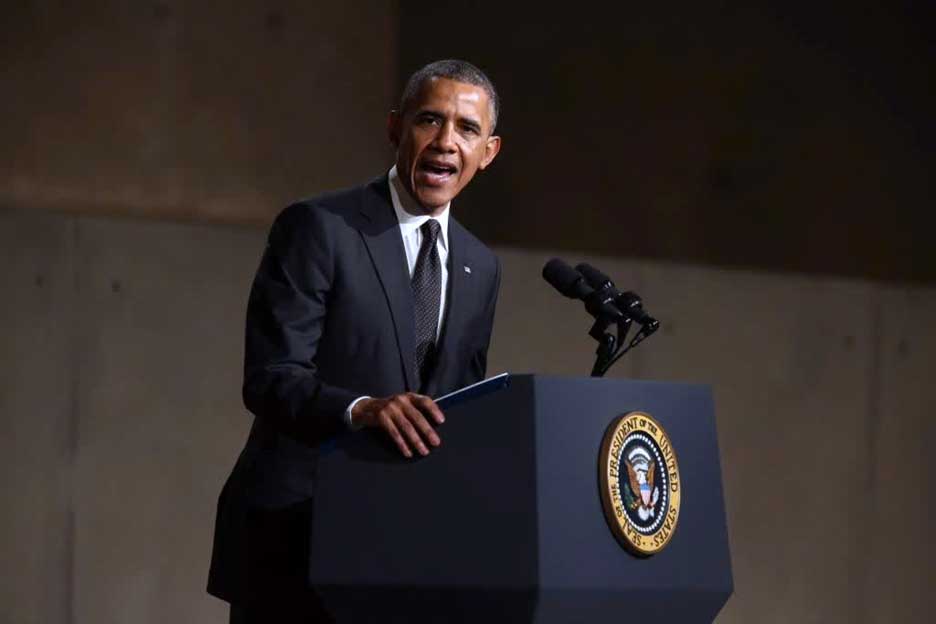
At the dedication ceremony, the president gave a speech and called it “a sacred place of healing and of hope.” (Hot 96.9, 2017). Strictly speaking, the Museum was opened that day because the Memorial Park is a public space. The ticketing and security screening of the Museum was done at its entrance Pavilion.
From its name, it was not hard to get the mission of the National September 11 Memorial & Museum. They were built to commemorate those who lost their lives during the terrorist attacks of September 11, 2001. 2983 people were killed during the attacks, including the victims and those who risked their lives to save lives.
However, from the quote of the president speech, the site stands more than a memorial, it is a testimony to human resilience and a symbol of hope. It serves as “a place of reflection, remembrance, and education, aiming to preserve the history and impact of these tragic events” (World History Edu 2024), demonstrating the “consequences of terrorism on individual lives and its impact on communities at the local, national, and international levels…” (World Trade Center 2019-2025).
The Design of The National September 11 Memorial & Museum
The National September 11 Memorial & Museum was built on the site of “Ground Zero”. Since the twin towers collapsed during the attacks, the site became void only with debris and human loss. The design was to transform the Ground Zero into a place that could remember and honor the loss meanwhile heralding hope and renewal.
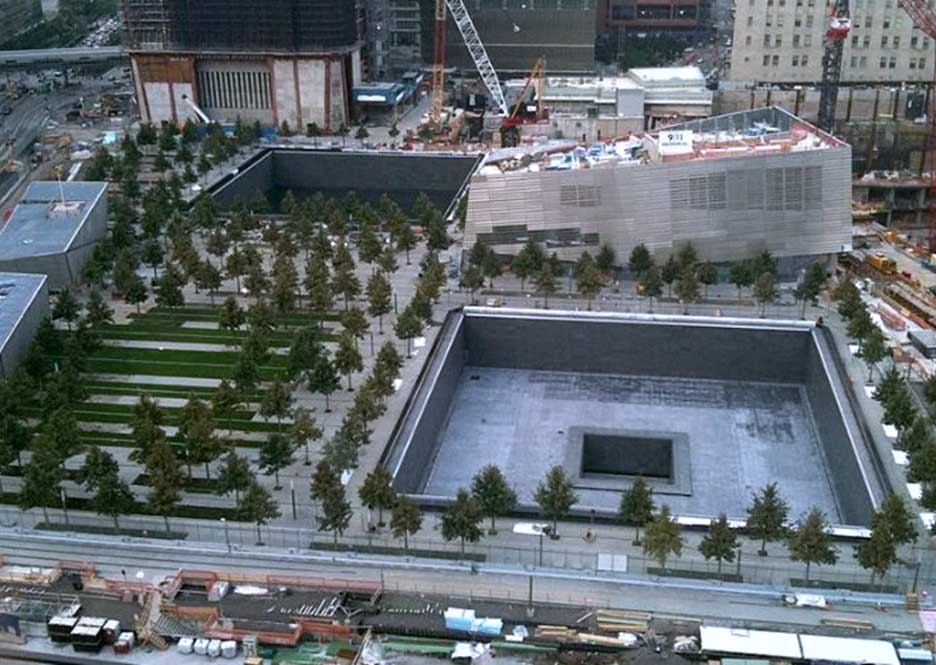
“Reflecting Absence”
In 2003, an international competition was launched to select the design for the memorial. The winning design title “Reflecting Absence” stood out from the 5000 submissions from worldwide in 2004. The design was submitted by architect Michael Arad, in collaboration with landscape architect Peter Walker, including 1) two reflecting pools with massive waterfalls disappearing into a void at the center of each pool, set within the footprints of the destroyed twin towers, surrounded with bronze parapets inscribed with the names of lost lives. 2) Over 400 white oak trees were planted for sustainability. Oak trees stand for longevity and resilience, bringing tranquility to the site as well.
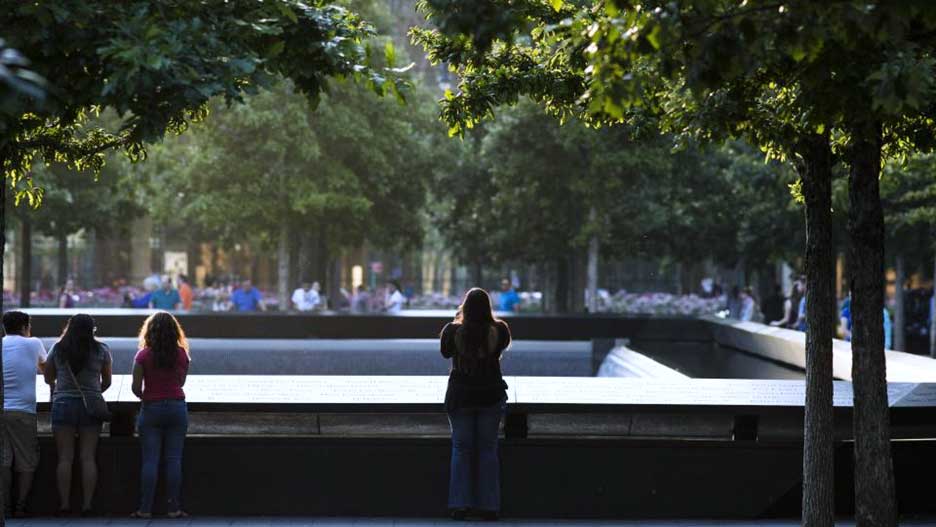
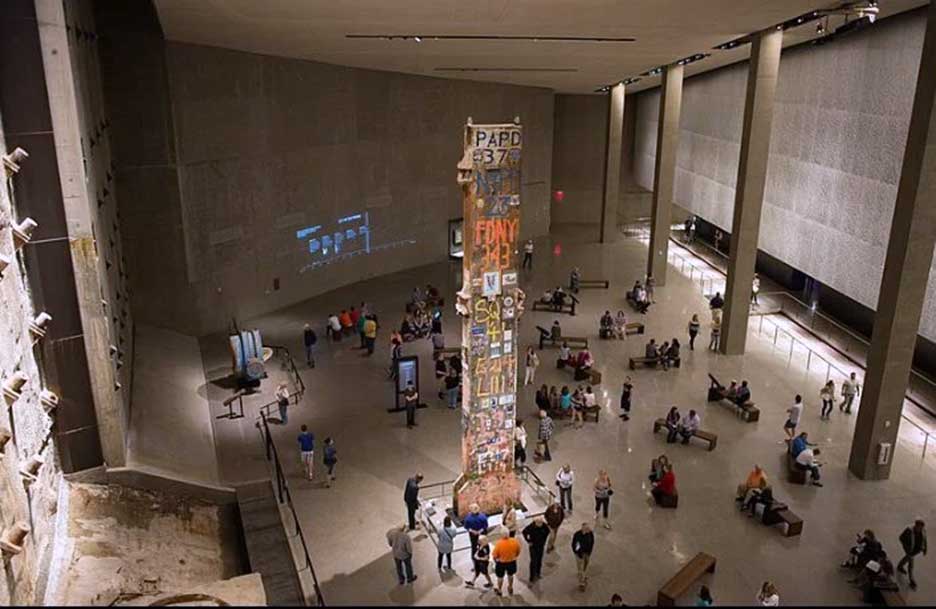
The Museum was built to preserve and display the history of 9/11 attacks through media, narratives, and a collection of monumental and authentic artifacts. The main exhibition mainly centers on three aspects 1) the events of 9/11; 2) memorial exhibition; 3) historical exhibition.
The Design & Stainless Steel Application of the Pavilion
Although designed by distinct architectural firms, these buildings share the same mission at the same site of the World Trade Center. Snøhetta, famous for their exploration of context, was commissioned to design the Pavilion in 2004. It turned out a pavilion on par with the “Reflecting Absence” design of the memorial.
Craig Dykers, the chief designer of Snøhetta, expressed their desire to design a place that could bridge the weight of history and the hope of future, a place that leads people into the spiritual quality the site conveys without forgetting the everyday life of New York city.
The pavilion is designed to resemble the image of a partially collapsed building with a striated facade reminiscent of the original towers. Light and airy materials like glass allowed the natural light into the underground museum for sustainability with the architect’s goal to receive a LEED rating of Gold. Glass makes up 22% of the outside of pavilion, and the rest is stainless steel composed of varying reflective finishes.
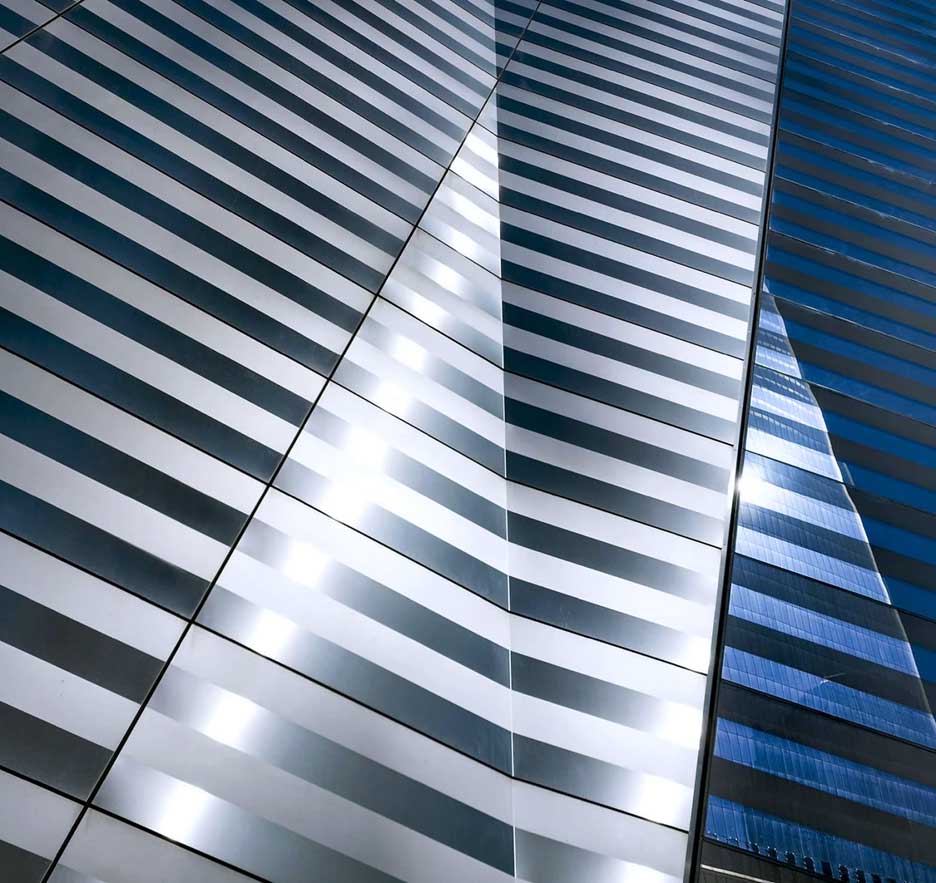
With the alternating glass and stainless steel panels clad, the façade can capture and reflect the changing seasons and moving people, constituting a confirmation of the present and the hope for future, justified by the words of Craig Dykers, “The pavilion reflects the people who are alive now, bridging the future and the past”. It serves as a bridge between the two worlds, the Memorial and the Museum, the above ground and the underground, the light and dark, the collective and individual experiences.
Stainless Steel from CIVMATS China
Whether you want to buy stainless steel materials from China, or want to explore more of this world, follow CIVMATS and get weekly updates on everything about stainless steel.
CIVMATS produce and export worldwide quality stainless steel sheet plate strip coils (flat products), as well as long products like stainless steel bars of varied shapes (round, flat, angle, square, hex and channel), stainless steel wires, ropes, tube pipes. Welcome for your stainless steel enquiry and purchasing. Choose CIVMATS, choose reliability.