
Overview
When we are doing research for Contemporary Jewish Museum, appearing on the list is the architect Daniel Libeskind whose name looks vaguely familiar. For those who keep following us, can you recall which case it is referring to?
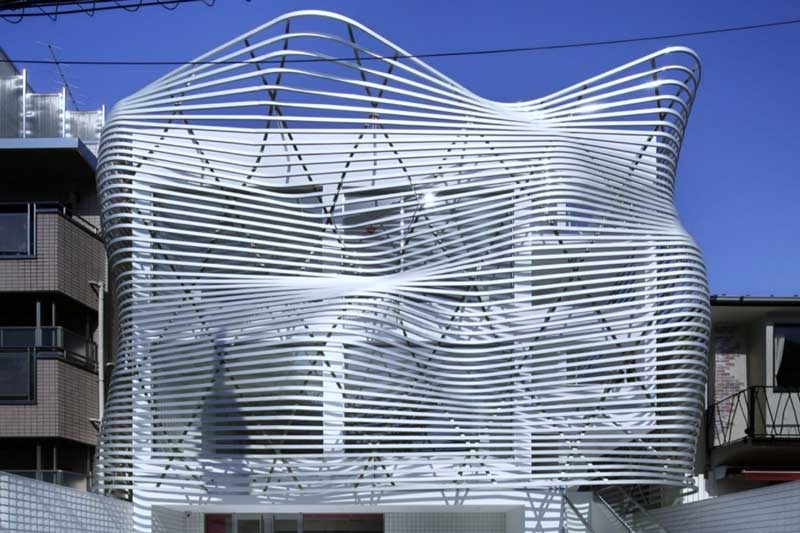
It is the 18.36.54 house introduced three weeks ago. With the answer revealed, his architectural style comes to mind so vividly all at once. This week let us explore the world of stainless steel through Libeskind’s another triumph - the Contemporary Jewish Museum.
Contemporary Jewish Museum
The Contemporary Jewish Museum (CJM) is a non-collecting museum located at 736 Mission StreetSan Francisco. It is nestled in the heart of San Francisco's Yerba Buena cultural district, one of the densest museum areas in the country with 12 cultural institutions located within a 16 block radius.
The Museum doesn’t commit itself to a permanent collection, but instead engages with its audiences the celebratory aspects of Jewish culture, history, art, and ideas through diversified exhibitions and educational programs. It hosts a rich variety of dynamic exhibitions with other institutions each year and showcases works of art and artifacts from the past and the contemporary in visual, performing, and media arts.
Background Information of Contemporary Jewish Museum
The predecessor of the museum’s main building is the former Pacific Gas & Electric (PG&E) Jessie Street Substation, originally constructed in 1881. It was redesigned by Willis Polk in 1905, and again in 1907 due to the 1906 San Francisco earthquake and fire, ended up with a brick power station.
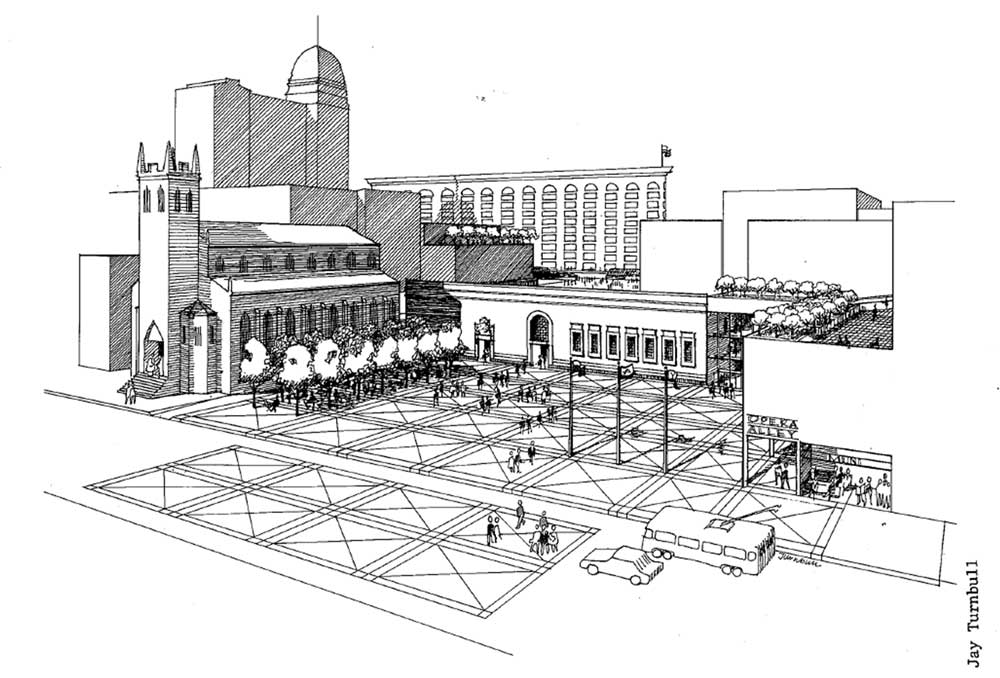
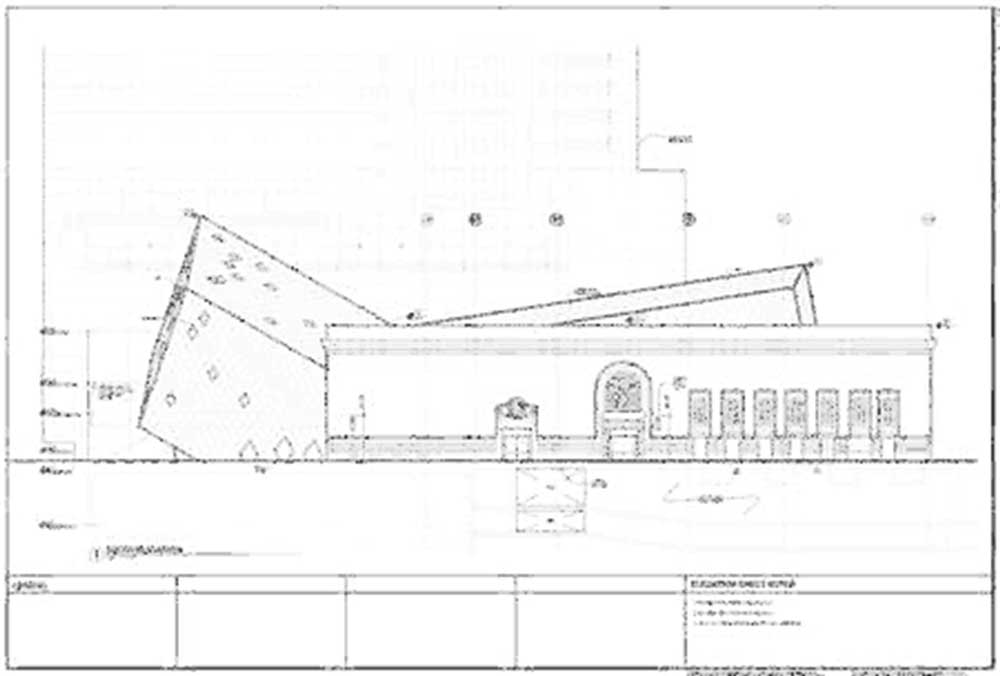
In 1976, PG&E survived as a historic structure and landmark from a Yerba Buena Center redevelopment program launched in 1974 when the Redevelopment Agency wanted to demolish the building for an open connecting mall. Below presented is the sketch of proposed integration of Jessie Street substation building with plaza by Jay Turnbull, 1975 (SF Heritage 2025).
The Yerba Buena Center project was developing in decades and the area was undergoing significant changes. In 1994 the allocated funds came when the Agency invited the CJM to seismically upgrade the PG&E building for use. In 1998 the CJM selected architect Daniel Libeskind to design its new home.
Founded in 1984, the CJM was initially housed in a small space on Mission Street. With its adaptive reuse of this historical landmark, the new home turned out to be a 63,000 square foot facility, involving over 10,000 square feet of exhibition space plus a multipurpose room. It was opened in 2008, marking the last pieces of the San Francisco Redevelopment Agency’s plan to revitalize the Yerba Buena district.
The Design of the Contemporary Jewish Museum
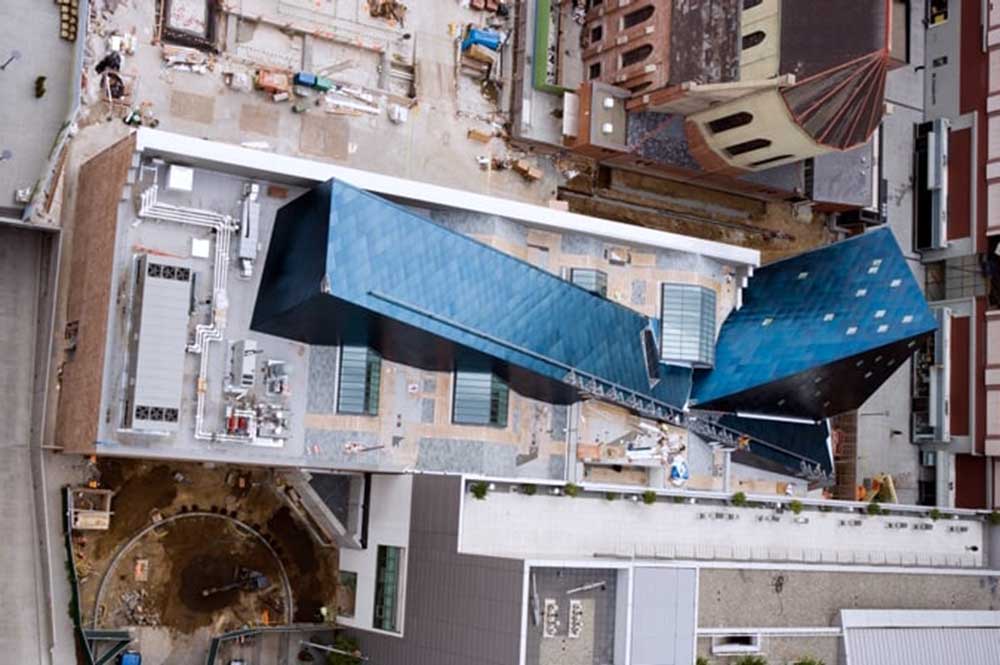
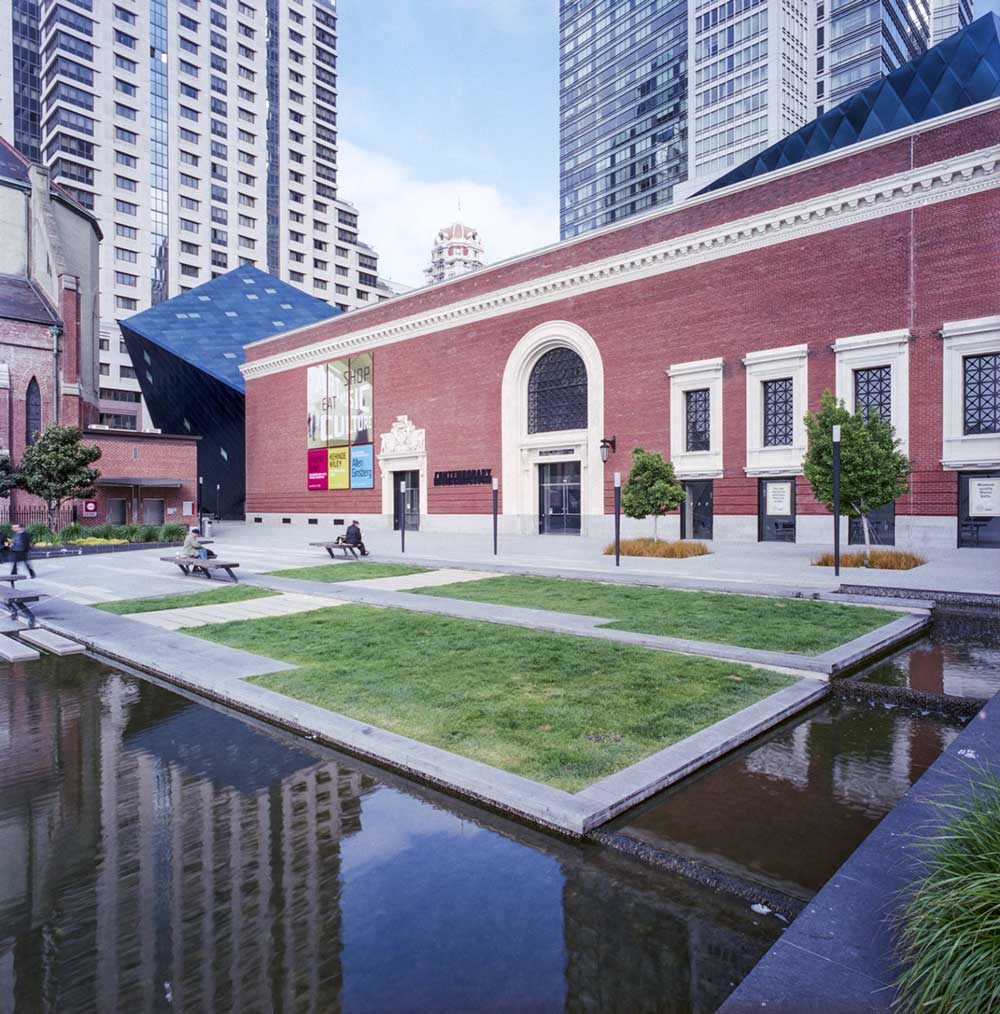
The CJM was the first commissioned project in North America by Libeskind who was famous for his design of the Jewish Museum Berlin. Libeskind responded to the task with a bold and innovative contemporary museum embedded with elements of the old Power Substation, illustrating the interplay between old and new.
When talking about his design, Libeskind said he was in part inspired by the Hebrew phrase L'Chaim (To Life), alluding to the significant role the old Jessie Street Power Substation played in restoring power to the city after the 1906 earthquake and fire (SF Heritage 2025). Regarding why blue color was chosen, some figured blue is associated with the idea of life, water as a life source, and a color representing Judaism. However, Libeskind chooses to leave it up for interpretation.
Stainless Steel Applied into the Contemporary Jewish Museum
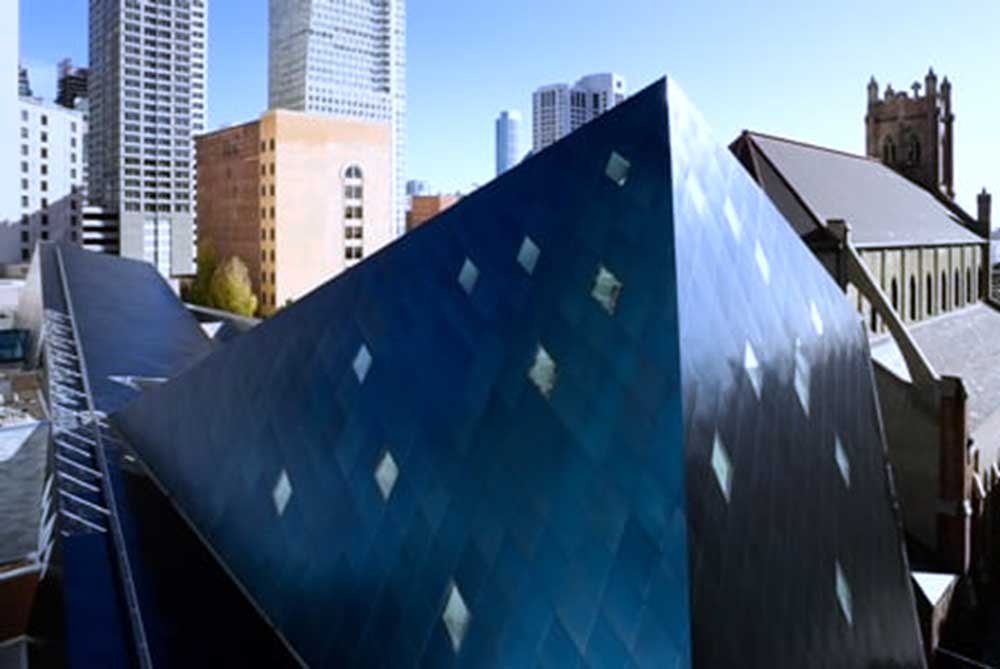
Apart from its cultural symbols, perhaps one of the most distinctive features of the CJM is its iridescent blue skin, swathed in 3,028 color-changing blue stainless steel panels. It is the first building to possess this unique cross-hatching surface finish, helpful in diffusing and softening the light reflection off its blue skin.
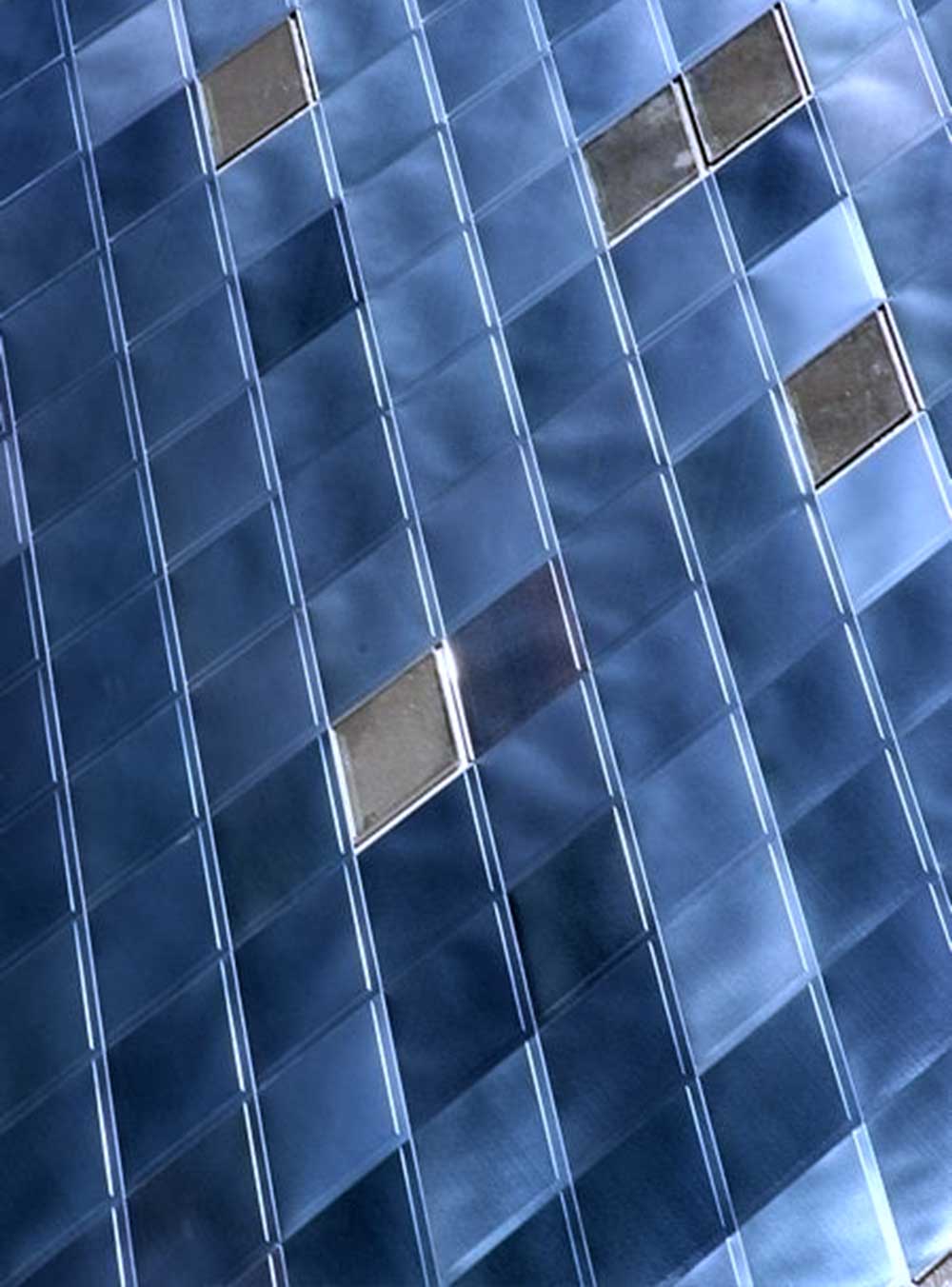
These panels are made from molybdenum-contained alloy stainless steel 316. The blue color is achieved through a process named interference-coating, which can guarantee the color will never fade or chalk. The luminous blue stainless steel façade seems to change color with the weather, the time when and the place where it is perceived, creating a dynamic and vivid visual experience.
Stainless Steel Materials from CIVMATS China
CIVMATS can process stainless steel sheets into different colors such as blue, gold, champaign gold, bronze, black or/and into diversified texture like hairline, mirror, No.4, satin per your specific demands. Grades and dimensions are customizable.
Apart from stainless steel flat products like sheet plate coil strip, CIVMATS also manufacture stainless steel materials into long products like bar pipe tube wire & ropes. We can customize shapes per your requirement. If you have any demand for stainless steel materials and plan to purchase them from China, welcome to CIVMATS. We aim to be your first and best stainless steel choice. Choose CIVMATS, choose reliability.